

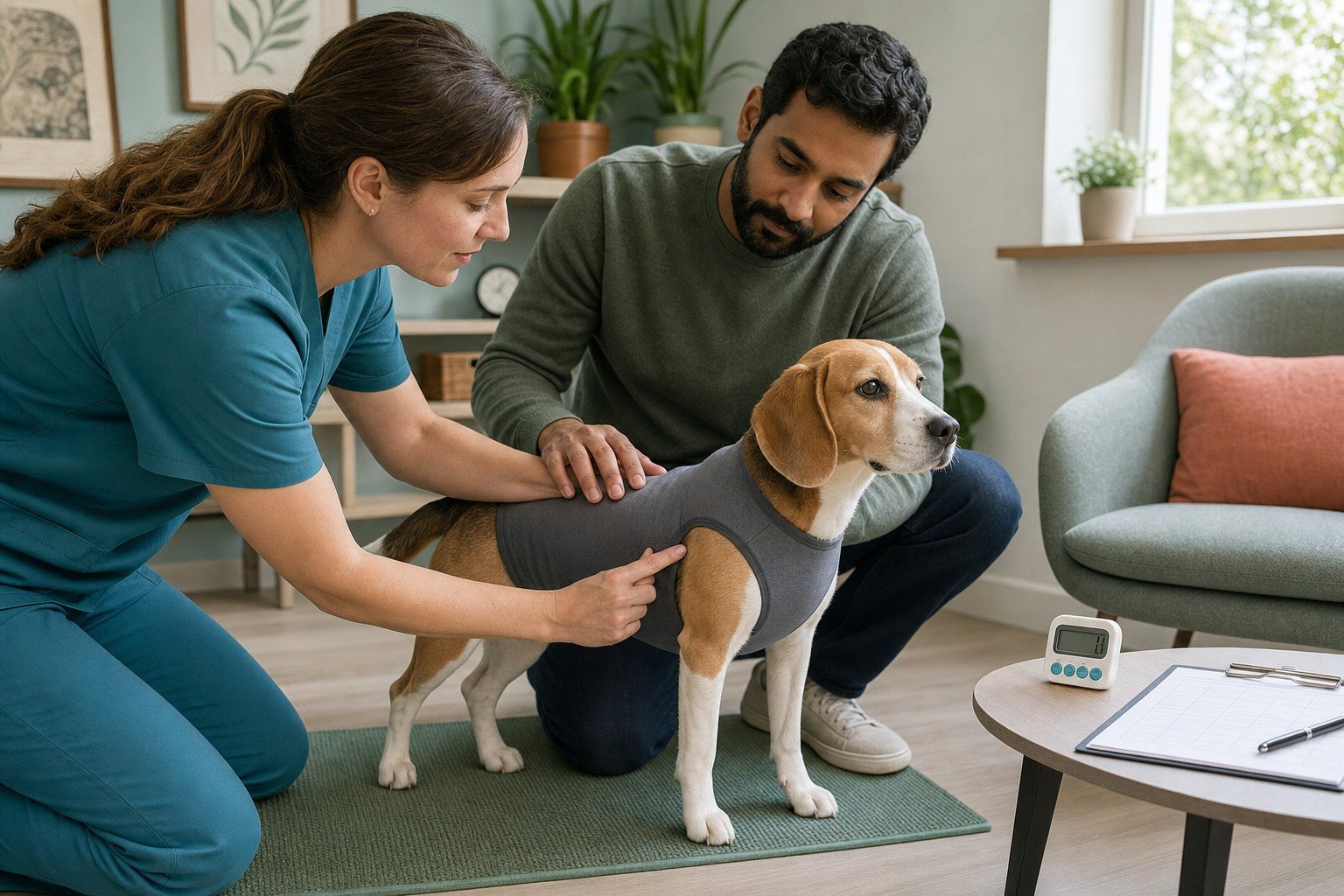
Pressure wraps and compression garments are marketed as calming tools for noise fear, separation-related distress, generalized anxiety, travel, and veterinary visits. A 2024 systematic review found only four eligible canine studies and judged the evidence weak and limited because samples were small, blinding was difficult, methods and triggers differed, and behavioral and physiologic results were inconsistent. Some studies reported short-term changes in heart rate or selected behavior, while others found little difference and owner reports were vulnerable to expectation effects. The absence of reported serious effects in small studies does not prove every garment is safe for every dog. A wrap should be treated as an optional, removable adjunct after diagnosis and safety planning, not as a cure, restraint, or substitute for behavior modification or medication. This guide names no brand, product, size, shopping link, or do-it-yourself wrapping method.
Short answer
The evidence is weak, limited, and not a guarantee
The 2024 systematic review identified four studies and concluded that confidence in benefit is low because of moderate-to-high bias risk, small samples, short exposures, and inconsistent outcomes. Pressure garments may help some dogs, do nothing for others, or create discomfort; the individual response must be observed. [1] [2]
- Record the trigger, distance or intensity, body language, recovery, and whole-dog function with dates.
- Use research to prepare a veterinary conversation, not to diagnose or run a treatment protocol alone.
- Bring every medication, supplement, diet, prior plan, and safe home video to the appointment.
- Agree on safety rules, measurable outcomes, reassessment timing, and urgent-contact signs.
Safety first
Remove the garment if breathing, movement, temperature, skin, or fear worsens
Remove the product and contact a veterinarian for labored breathing, overheating, swelling, chafing, wounds, vomiting, collapse, severe agitation, freezing, frantic escape, or a marked gait change. Do not use a garment to hold a dog through panic or aggression. Seek urgent help for severe distress, self-injury, escape danger, or sudden medical decline.
- Do not force exposure, punish fear, or prevent escape to make a dog appear calm.
- Do not start, stop, combine, or calculate medication or treatment from this article.
- Protect people and animals with distance, barriers, supervision, and qualified help.
Veterinary note
This article is educational and does not diagnose, treat, prescribe, or replace care from a licensed veterinarian. Your dog’s history, examination, diet, medications, and current signs determine what is appropriate.
What pressure products are intended to do
These garments apply mild-to-moderate pressure around parts of the torso. Proposed calming mechanisms are not established as a reliable clinical pathway in dogs, and different designs may distribute pressure differently.
A wrap does not diagnose the cause of fear, teach a new emotional response, or make an unsafe trigger safe. Reduced movement can reflect relaxation, restriction, freezing, heat, or discomfort, so body language matters.
Merck lists therapy wraps among possible adjuncts for selected patients, alongside management, behavior modification, medication, and other supports. Adjunct does not mean required or evidence-equivalent. [3]
What the studies and systematic review found
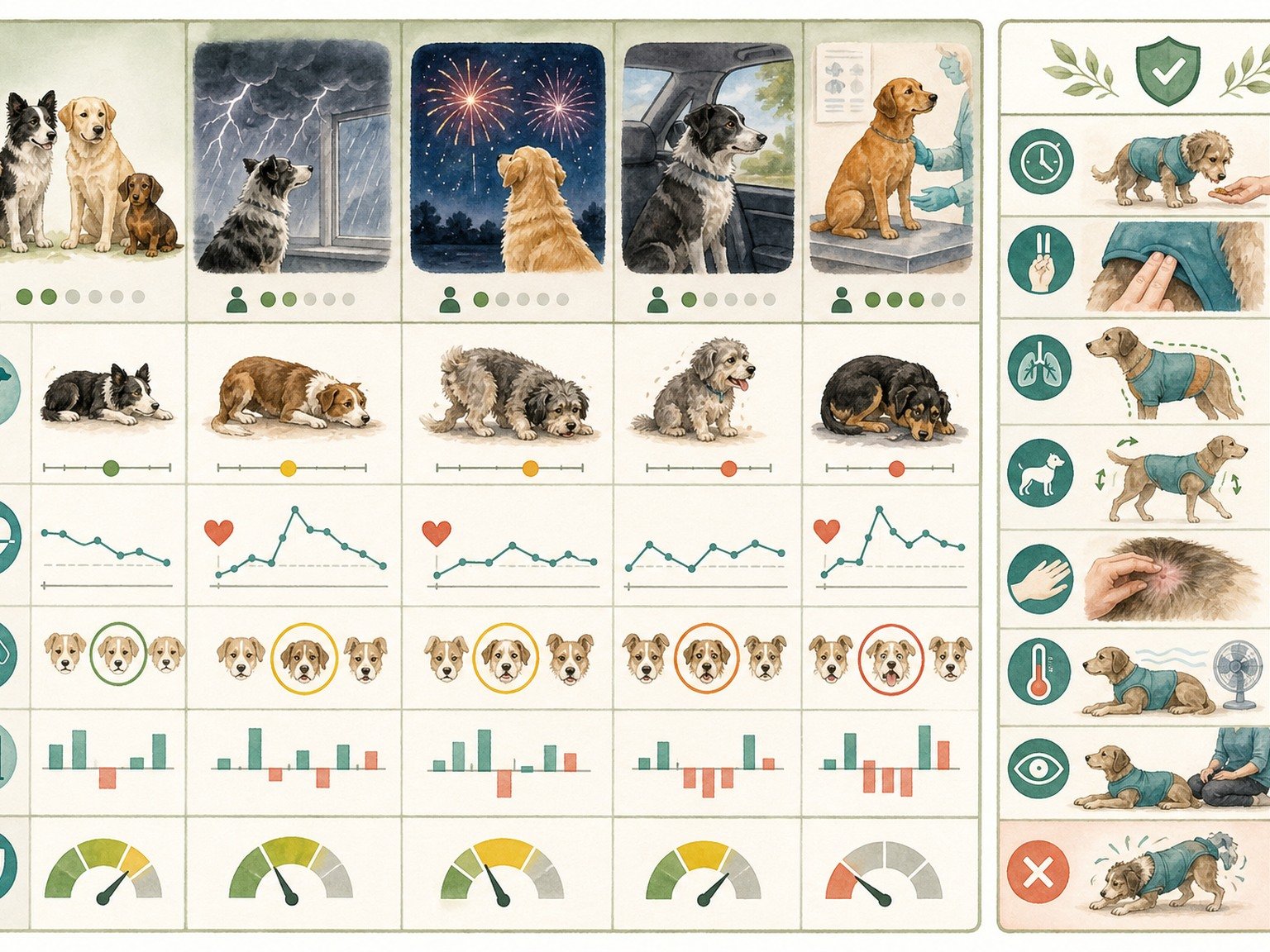
The systematic review screened 229 records and retained four studies involving different wraps, anxiety contexts, and outcomes. Most reported minimal benefits or selected short-term changes rather than consistent improvement across behavior and physiology. [1]
One randomized study found a smaller increase in average heart rate with recommended pressure but few behavioral differences. An open-label thunderstorm study reported favorable owner impressions without blinding, making expectation and natural variation difficult to separate. [4]
The review judged confidence low because of incomplete reporting, small samples, short laboratory exposures, limited real-world testing, and bias risk. A commercially popular product can still have uncertain average efficacy. [2]
How to assess fit, tolerance, and supervision
Introduce a plain garment when the dog is calm, before the feared event, and pair handling with a positive experience. Do not first wrestle it onto a panicked dog or tighten it until movement changes.
Follow professional and manufacturer fit instructions while checking normal breathing, free shoulder and hip movement, ability to lie down and turn, skin, temperature, seams, and pressure areas. A two-finger check is a prompt, not a universal fitting method.
Supervise use and remove the garment when distress, panting unrelated to the trigger, overheating, stiffness, scratching, freezing, or escape attempts appear. Never use it as a tie-down, muzzle substitute, crate restraint, or overnight solution without explicit veterinary guidance.
How to run an honest optional trial
Define one target context and baseline: body-language score, recovery time, ability to eat, heart rate only if a veterinarian recommends it, or another meaningful function. Compare similar events while noting that natural storms and real life are never identical.
Keep management and prescribed treatment in place. A pressure garment should not delay effective medication for predictable panic, veterinary behavior care, safe barriers, or desensitization and counter-conditioning. [5]
After several veterinarian-defined opportunities, review benefit, discomfort, burden, and evidence honestly. If there is no meaningful improvement, discontinue rather than escalating pressure or purchasing repeated variations on the same claim.
Prepare for a focused veterinary conversation
Bring a concise timeline, short natural-movement or symptom videos when safe, the exact names and photographs of every food, treat, medication, and supplement label, and notes about appetite, water intake, stool, sleep, activity, comfort, and behavior. Include recent injuries, travel, boarding, diet changes, missed medication, and previous test results. A complete record helps the veterinary team separate a repeatable pattern from a single impression.
Decide in advance what you need from the visit: an urgency decision, a diagnosis plan, a nutrition review, a pain or mobility assessment, or a monitored trial. Ask what result would change the plan and what finding would rule an option out. This keeps research and product information in the right role. Evidence can shape questions and expectations, but it cannot determine what is safe for an individual dog without the history and examination.
Owner tool
Evaluate a pressure garment safely
On a phone, swipe across the table to see every column.
| Checkpoint | Record | Why it helps |
|---|---|---|
| Baseline | Trigger and behavior score | Defines comparison |
| Fit | Breathing, movement, skin, heat | Finds harm |
| Response | Function, recovery, distress | Tests value |
| Review | Benefit, burden, next step | Prevents assumption |
Better questions, calmer next steps
Questions to ask your veterinarian
- What diagnosis and trigger are we addressing?
- What does the evidence actually support?
- How should fit and heat be checked?
- Which response means remove it?
- What established care must continue?
FAQ
Are anxiety wraps proven?
No. Current evidence is weak and limited.
Are they harmless?
Not necessarily; fit, heat, skin, and distress require monitoring.
Can a wrap replace medication?
No.
Does stillness mean calm?
No. It can also mean freezing or restriction.
Should I tighten it more if it fails?
No. Reassess and stop if needed.
Sources
- Animals: Systematic Review of Compression Wraps. Study count, methods, results, bias, and conclusions.
- PubMed: Systematic Review of Compression Wraps. Independent abstract record and evidence-strength conclusion.
- Merck Veterinary Manual: Treatment of Behavior Problems in Animals. Adjunctive role within integrated treatment.
- Veterinary Evidence: Pressure Vest Evidence Review. Independent appraisal of the pressure-wrap study outcomes and limitations.
- American Animal Hospital Association: Safe and Sound: Noise Aversion in Pets. Veterinary evaluation, behavior work, medication, and early intervention.
