


Short answer: Joint and mobility supplements for dogs are designed to support joint comfort and movement, especially as dogs age or when wear-and-tear becomes more noticeable, but mobility signs are reasons to talk with a veterinarian, not proof a supplement is needed. Many formulas include glucosamine, chondroitin, MSM, omega-3s, or similar ingredients that may be discussed as part of a broader vet-guided plan. Supplements cannot diagnose, treat, cure, or prevent arthritis, hip dysplasia, injuries, or other joint diseases. This guide explains common ingredients, formats, senior and large-breed considerations, red flags, and how to compare products cautiously after veterinary guidance.
Track Mobility Changes for Your Vet Visit
Note how your dog rises, walks, uses stairs, gets into the car, plays, rests, and responds to touch. Record when changes started, whether they are sudden or gradual, current medications and supplements, appetite, body weight, and any side effects. Short videos of movement at home can also help your veterinarian understand the pattern.
Short Answer: Can Joint Supplements Help Dogs?
When Joint Support May Make Sense in a Vet-Guided Plan
Joint support may be discussed for mild stiffness, age-related slowing, or long-term mobility care after a veterinarian has assessed your dog. It often works best alongside weight management, appropriate exercise, home changes, and medical care when needed.
What Supplements Cannot Do on Their Own
Supplements should not be used to delay care for pain, limping, sudden weakness, or major mobility changes. They do not replace diagnosis, medication, surgery, rehabilitation, or individualized veterinary treatment.
When to Contact Your Veterinarian Promptly
Contact your veterinarian promptly if your dog has sudden limping, severe pain, difficulty standing or walking, collapse, crying when moving, inability to bear weight, swelling, dragging a limb, major behavior changes, or rapid mobility decline, especially in puppies, seniors, large-breed dogs, or dogs with known health conditions.
What Are Dog Joint Supplements?
Dog joint supplements are chews, tablets, powders, liquids, oils, or capsules meant to support normal joint comfort and mobility. They differ from medications, which are prescribed or directed by veterinarians to address diagnosed problems, and from diet, which provides baseline nutrition.
Types of Joint Supplements
| Product type | Key ingredients | Best suited dogs | Key cautions |
|---|---|---|---|
| Joint chews | Glucosamine, chondroitin, MSM, omega-3s | Dogs that accept treat-style routines | Watch calories, flavors, and multi-chew dosing |
| Tablets/capsules | Focused ingredient blends | Dogs comfortable with pills | May be hard for picky dogs |
| Powders | Joint blends mixed with meals | Multi-dog homes or dogs on meal routines | Food refusal if taste or texture changes |
| Liquids/oils | Often omega-3 or liquid joint blends | Dogs needing flexible dosing | Storage, measuring, and fat tolerance matter |
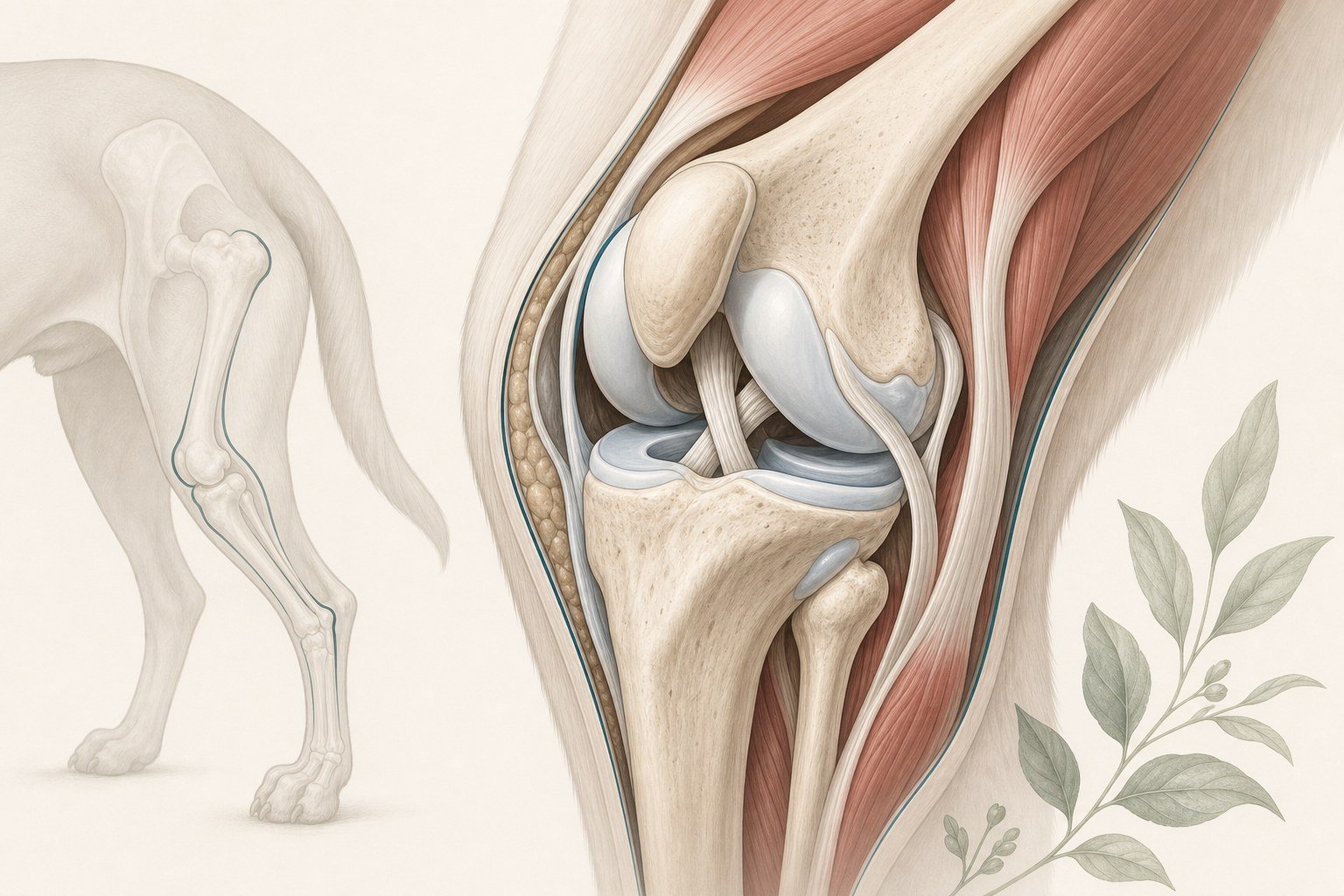
How Dog Joints and Mobility Work
Joints connect bones and help dogs walk, rise, run, jump, climb stairs, and play. Cartilage, joint fluid, ligaments, tendons, and muscles all contribute to comfortable movement. Aging, body size, weight, activity, injuries, and underlying conditions can change how a dog moves.
How Urgent Is the Mobility Change?
Discuss with your vet: mild stiffness after rest, slower rising, reluctance to jump, cautious stair use, or gradual age-related slowing.
Seek prompt care: sudden lameness, severe pain, collapse, crying when moving, dragging a limb, swelling, inability to bear weight, or rapid decline.
Common Reasons Owners Consider Joint Support
Owners often ask about joint support when dogs are slower to get up, seem stiff after rest, hesitate before jumping into the car, avoid stairs, or tire more easily. These signs should be tracked and discussed with a veterinarian because the cause matters.
Common Joint-Support Ingredients
Glucosamine for Dogs
Glucosamine is common in joint formulas, often alongside chondroitin. However, recent veterinary evidence reviews have not found reliable pain-relief benefit from glucosamine-chondroitin products for canine and feline osteoarthritis. Do not use these ingredients to delay diagnosis or prescribed pain management.
Chondroitin for Dogs
Chondroitin is frequently paired with glucosamine, but popularity is not proof of benefit. If your veterinarian considers a trial reasonable, choose a product with transparent amounts and agree in advance on what improvement would count and when to reassess.
MSM for Dogs
MSM appears in many multi-ingredient mobility formulas, but evidence for meaningful clinical benefit in dogs is limited. Ask whether it adds value to the plan and avoid stacking several products with overlapping ingredients.
Omega-3s for Joint Support
Systematic-review evidence is more supportive of omega-3-enriched diets or supplements than glucosamine-chondroitin for osteoarthritis pain, but source, EPA and DHA amounts, calories, gastrointestinal tolerance, health conditions, and medication use still require veterinary review.
Joint Support for Senior Dogs
Senior dogs often need a broader plan: body condition, pain assessment, safe exercise, home surfaces, medications if prescribed, and cautious supplement discussion. Do not assume every senior dog automatically needs a joint supplement.
Joint Support for Large and Giant Breeds
Large and giant breeds may place more stress on joints and may need careful weight management and dosing review. Avoid products that require impractical amounts or have unclear high-weight directions.
Arthritis, Stiffness, and Mobility Concerns
Stiffness, limping, reluctance to rise, and reduced activity can have many causes. Arthritis, hip dysplasia, injuries, neurologic issues, and pain conditions require veterinary diagnosis. Supplements, if used, should fit into a diagnosed or vet-guided care plan.
How to Choose a Dog Joint Supplement
Match products to age, size, format preference, health history, and your vet’s recommendation. Use the How to Read a Dog Supplement Label guide to review active ingredients, serving size, warnings, inactive ingredients, quality signals, and overlap with other products.
Format Table: Chews vs Tablets vs Powders vs Liquids
| Format | Pros | Cons | Best suited dogs |
|---|---|---|---|
| Chews | Convenient and palatable | May add calories or flavoring | Dogs that like treat routines |
| Tablets/capsules | Precise and tidy | Harder for some dogs | Dogs comfortable with pills |
| Powders | Flexible with meals | May change food texture | Meal-fed dogs and multi-dog homes |
| Liquids | Easy to mix and measure for some dogs | Storage and dosing can be messy | Dogs that refuse chews or pills |
How to Introduce Joint Supplements Safely
Introduce one product at a time, follow label or veterinary directions, and track appetite, stool, energy, comfort, activity, and behavior. Recheck with your vet if mobility worsens, no improvement appears after the agreed trial, or side effects occur.
How Healthy Paws Essentials Assesses Joint Products
Healthy Paws Essentials evaluates joint products by ingredient transparency, dosing clarity, quality signals, safety cautions, evidence context, owner practicality, and reviewer input. Read how Healthy Paws Essentials reviews joint and mobility products and how we handle affiliate links and recommendations.
Related Guides and Next Steps
Dog Joint Supplement FAQs
Do joint supplements help all dogs with stiffness?
No. They may help support comfort and mobility in some dogs, but stiffness has many causes and should be discussed with a vet.
Can joint supplements replace arthritis medication or vet care?
No. They are supportive tools and do not replace diagnosis, medication, pain control, rehabilitation, surgery, or veterinary care.
Is glucosamine safe for most dogs?
Glucosamine is common, but safety and usefulness depend on the dog’s size, health conditions, medications, and the full formula. Current evidence does not support relying on glucosamine-chondroitin products for osteoarthritis pain relief.
Should I start supplements when my dog slows down?
Slowing down is a reason to talk with your veterinarian. After evaluation, a supplement may or may not belong in the plan.
Can puppies take joint supplements?
Puppies with mobility concerns need prompt veterinary evaluation. Supplements for puppies should be used only under veterinary direction.
Medical and Veterinary Disclaimer
This guide is educational and is not a substitute for veterinary diagnosis, treatment, medication, nutrition planning, pain management, rehabilitation, or individualized care. Ask your veterinarian before starting a supplement, especially for puppies, seniors, large-breed dogs, dogs taking medication, dogs with health conditions, or dogs with chronic pain or mobility signs. Read the full medical and veterinary disclaimer.