


Short answer: A dog supplement label should clearly tell you what is in the product, how much your dog is supposed to get, how that serving relates to your dog’s weight, and what warnings or usage notes apply. Check active ingredients, inactive ingredients, amount per serving, serving instructions, age or weight guidance, quality signals, manufacturer transparency, claims, and warning language. A clear label does not guarantee that a supplement is safe or effective for your dog, but it gives you information to compare products and ask better questions. For puppies, senior dogs, dogs with health conditions, dogs taking medication, or dogs with ongoing symptoms, use the label as a conversation tool with your veterinarian before starting anything new.
Short Answer: What Should You Look For on a Dog Supplement Label?
The Essential Elements in One Quick List
- Product purpose and supplement category.
- Active ingredients and amounts per serving.
- Inactive ingredients, flavors, fillers, preservatives, and sweeteners.
- Serving size and directions by weight, age, or situation.
- Warnings, medication cautions, age limits, and storage instructions.
- Manufacturer contact details and quality or testing information.
- Marketing claims that need context.
When Label Questions Mean Ask Your Vet Before Buying
Pause before buying if the label is vague, dosing is unclear, your dog has a health condition, your dog takes medication, the product is for a puppy or senior dog, or the label claims seem broad or dramatic.
What “Supplement” Means on a U.S. Animal Product
The U.S. dietary-supplement framework created for people does not establish a separate regulatory category for animal products. FDA evaluates products marketed as animal supplements as animal food or animal drugs depending on their composition and intended use. Claims to diagnose, cure, mitigate, treat, or prevent disease can indicate that a product is being marketed as an animal drug. This regulatory context does not prove that an individual product is safe, effective, or appropriate for your dog.
Why Reading Dog Supplement Labels Matters
Supplements Support; They Do Not Stand In for Vet Care or Diet
Supplements may help support a wellness goal, but they should not stand in for a complete diet, diagnosis, treatment, medication, training, or veterinary care.
How Labels Help You Avoid Unnecessary or Risky Products
A careful label review can reveal overlapping ingredients, unclear amounts, age restrictions, vague blends, or missing warnings. It can also help you decide that no supplement, or a different category, may be safer.
Active Ingredients vs Inactive Ingredients
What Counts as an Active Ingredient
Active ingredients provide the supplement’s main support. In a probiotic, this might include listed strains and CFUs. In a joint supplement, it might include glucosamine, chondroitin, MSM, omega-3s, or other mobility-support ingredients.
Why Inactive Ingredients Matter
Inactive ingredients may include flavors, binders, fillers, preservatives, colors, oils, starches, texture agents, or sweeteners. These can affect palatability, calories, allergies, sensitivities, and safety. Check specifically for xylitol in human gummies, liquids, or chewable products because xylitol is toxic to dogs.
How to Scan Both Lists
Read active ingredients first, then inactive ingredients. Look for anything your dog has reacted to before, anything you do not recognize, and anything that could overlap with another product.
Dosage, Serving Size, and Dog Weight
Serving Size vs Amount per Serving
Serving size tells you how much product to give. Amount per serving tells you how much of each ingredient is in that serving.
Adjusting for Dog Weight and Multiple Dogs
Many labels use weight ranges. Make sure your dog’s current weight fits the range, and do not assume the same serving works for every dog in the home.
Why More Is Not Always Better
Giving more than the label or your veterinarian recommends can increase risk without improving benefit, especially with multivitamins, calming products, and stacked supplements.
Understanding Probiotic Labels
Probiotic labels may list bacterial strains and CFUs. Look for whether the product is formulated for dogs, how it should be stored, and whether it is meant for daily use, short-term digestive support, or diet changes. Red flags include unclear strains, weak serving directions, no storage guidance when needed, dramatic gut-health claims, or no manufacturer contact information. Read Dog Probiotics Explained and Prebiotics vs Probiotics for Dogs.
Understanding Joint Supplement Labels
Joint supplement labels often list glucosamine, chondroitin, MSM, omega-3 fatty acids, green-lipped mussel, hyaluronic acid, or antioxidant blends. Watch for unclear amounts, broad mobility promises, missing warnings, proprietary blends, or instructions that do not account for dog size.
Understanding Calming Supplement Labels
Calming products may include L-theanine, tryptophan, chamomile, melatonin, colostrum-derived calming complexes, or herbal blends. Check whether the label is intended for daily support, travel, grooming, storms, fireworks, or other predictable events. Be cautious with labels that promise instant results for every dog. See Calming & Anxiety Supplements for Dogs, Dog Anxiety: Causes, Triggers, Training, and Support, and Calming Chews vs Training.
Understanding Skin and Coat Supplement Labels
Skin and coat products often include omega-3s, vitamin E, biotin, or zinc. Labels should clarify source and amount. Persistent skin or coat changes should be assessed by a veterinarian before adding a supplement.
Understanding Multivitamin Labels
Multivitamin labels can list many nutrients, but more ingredients do not automatically make a product better. Compare them with your dog’s food and other supplements. Review the complete diet with your veterinarian before adding broad vitamin or mineral coverage.
Claims, Buzzwords, and Marketing Language
Vet Recommended
This may refer to a veterinarian, survey, marketing relationship, or broad endorsement. It does not automatically mean the product is appropriate for your dog.
Natural, Human Grade, Grain-Free
Natural does not guarantee safety. Human grade does not guarantee effectiveness. Grain-free may not matter to the supplement’s purpose.
Quality Signals and Red Flags
Positive signals include clear ingredient amounts, manufacturer contact information, lot or expiration details, storage instructions, testing information, and useful warning language.
- Promises to resolve medical conditions, block future illness, or replace veterinary care.
- Claims that the product works for all dogs.
- No clear serving directions.
- No warning or interaction information.
- No manufacturer contact details.
- Proprietary blends with unclear active ingredient amounts.
- Claims that natural automatically means safe.
Warnings, Contraindications, and Medication Interactions
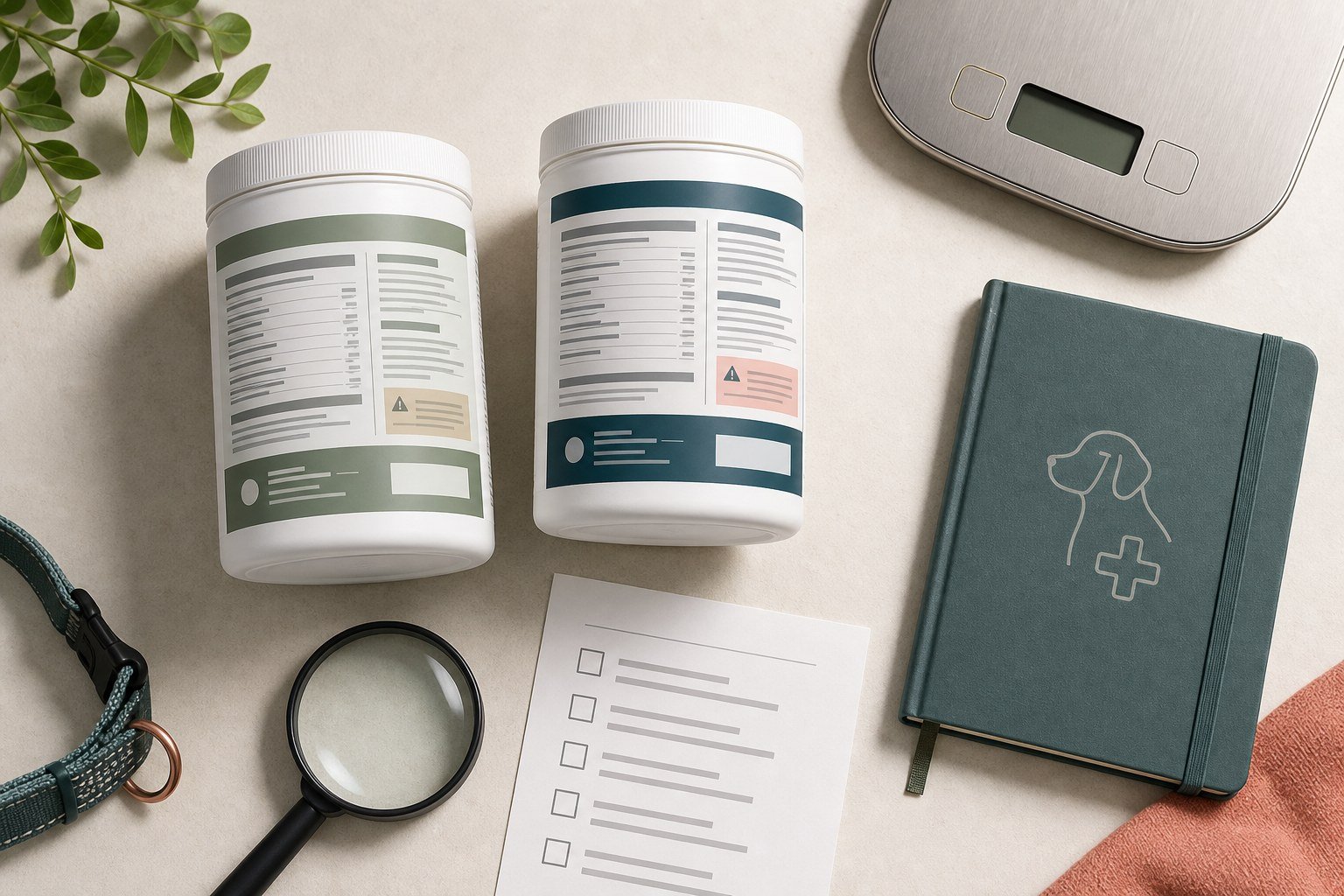
A useful warning section may mention age restrictions, pregnancy or nursing cautions, medication interactions, condition cautions, storage, side effects to watch for, and when to stop use. If a warning section is missing or unclear, do not assume there are no risks.
When a Product Reaction Needs Prompt Help
Contact your veterinarian or an animal poison-control service promptly for vomiting, marked weakness, unsteadiness, tremors, collapse, seizures, severe lethargy, breathing difficulty, or another sudden change after a product is given. Bring the container or a clear photo of the complete label. If xylitol exposure is possible, do not wait for symptoms.
How to Compare Two Supplement Labels
- Confirm both products are in the same category.
- Compare active ingredients and amounts per serving.
- Compare serving directions for your dog’s weight.
- Review inactive ingredients and potential sensitivities.
- Check warnings, storage, and manufacturer transparency.
- Estimate cost per day only after safety and fit are clear.
Age, weight, breed, diet, medications, and health history all affect whether a product makes sense.
Questions to Ask Your Vet Before Buying
- Does this supplement category make sense for my dog?
- Are any ingredients concerning for my dog’s health history?
- Could this interact with medication or another supplement?
- How long should we try it before reassessing?
- What changes should I watch for?
How to Compare Supplement Information
Look for clear ingredient amounts, weight-based directions, safety cautions, quality documentation, and claims that match the evidence. Read our product review methodology and affiliate disclosure for how evidence and commercial links are handled.
Dog Supplement Label Checklist Preview
- Product name and intended purpose.
- Active ingredients and amounts.
- Serving size and dose by weight.
- Inactive ingredients of concern.
- Warnings, age limits, and condition notes.
- Medication or supplement overlap.
- Quality signals and manufacturer transparency.
- Marketing claims to question.
- Questions to ask your veterinarian.
Related Guides and Next Steps
- Dog Supplements: A Complete Owner’s Guide
- Dog Probiotics Explained
- Prebiotics vs Probiotics for Dogs
- Dog Joint Supplement Ingredients Explained
- Calming Chews vs Training
Dog Supplement Label FAQs
What’s the most important thing to check first?
Start with active ingredients and serving directions.
How do I know if a dose is right?
Check dosing by weight range. If directions are unclear, ask your veterinarian.
Why do inactive ingredients matter?
They may matter for allergies, sensitivities, weight concerns, or digestive upset.
Does natural mean safer?
No. Natural is not a safety guarantee.
Can I use more than one supplement?
Not always. Multiple products can overlap ingredients or increase total doses.
Medical and Veterinary Disclaimer
This guide is educational and is not a substitute for veterinary diagnosis, treatment, medication, nutrition planning, training, or behavior care. A supplement label can help you ask better questions, but it cannot determine whether a product is appropriate for a dog with symptoms, medication use, or health conditions. Read the full medical and veterinary disclaimer.