

CARE & SAFETY / NUTRITION
Turn label guidance into an individualized feeding amount using calories, body condition, weight trend, treats, and veterinary feedback.
Short answer
Package feeding charts are estimates. The right portion is the measured total that maintains an appropriate body and muscle condition for your dog’s age, health, activity, and reproductive status. Include every treat, chew, topper, supplement, and training reward, then adjust gradually using trend data.
What to observe
Write down the pattern before changing several things at once. A short log gives your veterinary or behavior team better context and helps you see whether the plan is improving comfort and safety.
- Current weight plus body and muscle condition rather than weight alone
- Calories per cup, can, pouch, or gram and the exact amount actually served
- All household feeders and every source of extra calories
- Changes in activity, neuter status, medication, appetite, stool, or health
A practical next-step plan
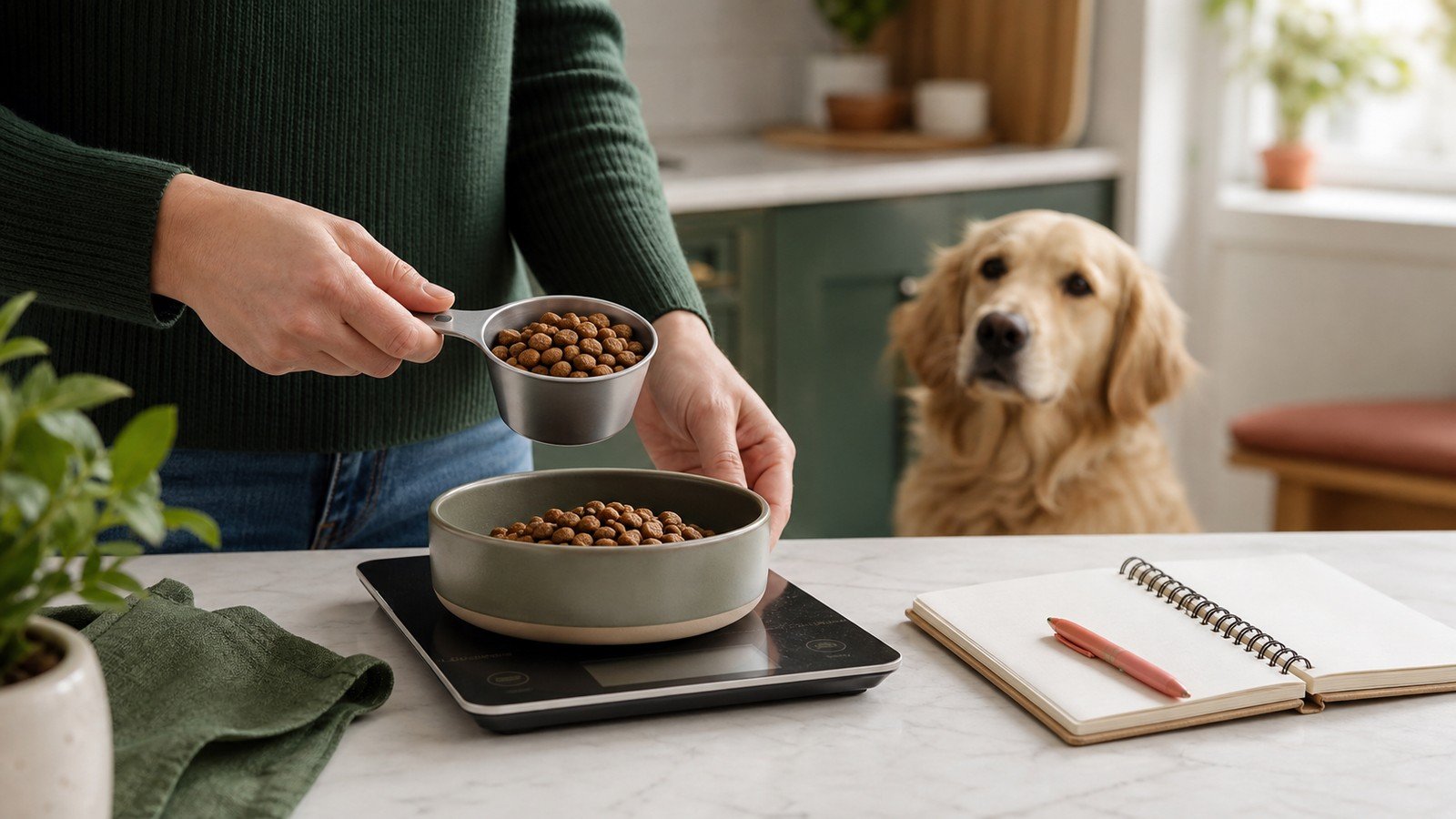
- Measure the daily ration consistently; a gram scale improves precision
- Pre-portion treats and training food from the daily allowance
- Weigh and reassess body condition on a regular schedule
- Change portions in small steps and hold other variables steady
- Ask the veterinary team for a target and recheck interval when weight change is intended
What not to do
Do not judge a food by one ingredient, a fashionable label, or an online ranking alone. Avoid abrupt switching, unmeasured toppers, and vitamins or minerals added to an already complete diet without veterinary guidance. These changes can hide the real cause of a problem and alter nutrient balance.
A steadier next step
Record the exact diet and daily amount, hold unnecessary extras steady, and monitor weight, body condition, appetite, stool, and energy. Make one planned change at a time. Dogs with disease, poor growth, pregnancy, unexplained weight change, or a therapeutic diet need an individualized veterinary nutrition plan.
- Choose the smallest change that meaningfully improves safety or clarity
- Define what you will observe and how often you will record it
- Keep essential veterinary care and prescribed treatment unchanged unless the clinician directs otherwise
- Set a date to review progress and decide whether professional help is needed
Veterinary note
Sudden changes in appetite, movement, sleep, elimination, tolerance of handling, or behavior can have a medical component. Share the timeline, photos or video, diet, medications, supplements, and recent changes with your veterinarian. This guide supports that conversation; it cannot diagnose your dog.
Reading the pattern
| Pattern | What it may tell you | Useful response |
|---|---|---|
| Predictable and mild | A specific context may be driving the response. | Manage that context, change one variable, and track recovery. |
| New or rapidly worsening | Pain, illness, medication effects, or a major environmental change may be contributing. | Arrange veterinary assessment instead of assuming it is only training or routine. |
| Dangerous or difficult to interrupt | The current setup is beyond what can be handled safely. | Increase distance and barriers and obtain qualified professional help. |
Safety first
Rapid or unexplained weight change, muscle loss, persistent hunger with weight loss, refusal to eat, excessive thirst or urination, vomiting, or diarrhea needs veterinary evaluation.
Prepare for the visit
- Bring a dated log of the pattern and any photos or video that can be captured safely
- List all food, treats, supplements, preventives, and medications with amounts and timing
- Note recent travel, household, schedule, activity, injury, or diet changes
- Write down the outcome you want and the situations that are hardest to manage
- Ask what would require urgent care, a recheck, diagnostic testing, or specialist referral
Questions pet parents often ask
How quickly should I expect a change?
That depends on the cause, the dog, and the starting point. A management change can reduce immediate risk on day one, while health, nutrition, conditioning, or behavior outcomes may require a longer monitored plan. Worsening signs or poor recovery are reasons to reassess sooner.
Can I solve this with a product?
A product may sometimes support a practical step, but it cannot replace diagnosis, appropriate training, a complete diet, supervision, or veterinary treatment. Start with the decision criteria and the dog’s needs; do not let a purchase become the plan.
What is the most useful thing to bring to my veterinarian?
A concise timeline is usually more useful than a long recollection. Include when the pattern began, frequency, triggers, recovery, diet, medications, supplements, recent changes, and photos or video captured without creating risk.
Sources and further reading
- WSAVA Guidelines on Selecting Pet Foods
- FDA Pet Food Overview
- AAHA Canine Life Stage Nutrition Checklist
Medical disclaimer: This educational guide is not a diagnosis or a substitute for veterinary care. Contact your veterinarian for advice tailored to your dog, and seek emergency care for urgent signs.
Explore Care & Safety · Medical disclaimer · How we evaluate guidance
