

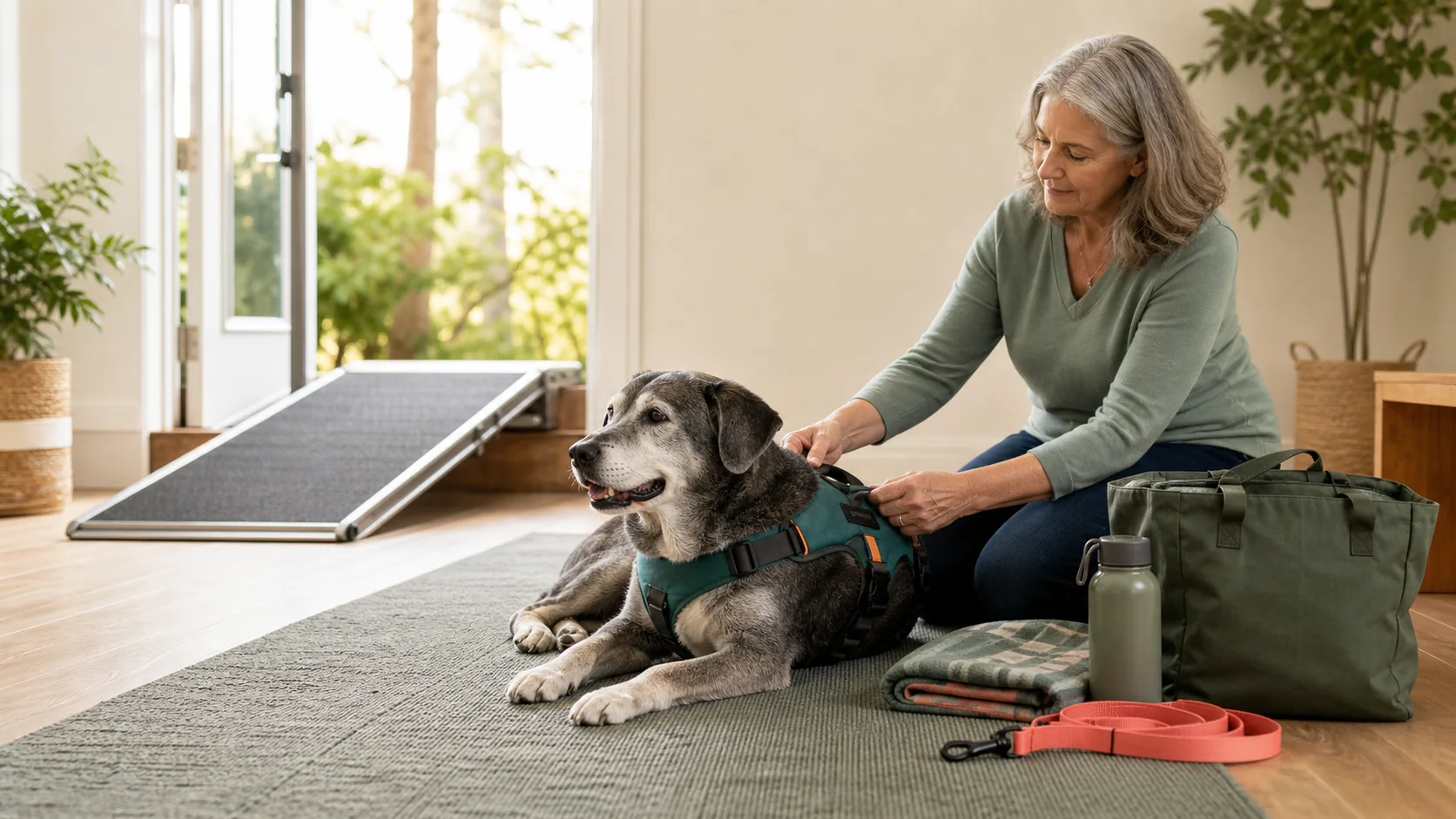
A mobility-aware emergency plan for evacuation, power loss, severe weather, transport disruption, and the hours before veterinary help is reachable.
Short answer
Plan for movement before the emergency begins
A dog with limited mobility may need more time, traction, space, caregiver support, medication continuity, and a realistic transport method during an emergency. Prepare a pet-inclusive contact plan, supplies, accessible exit routes, and a veterinarian-approved way to assist your dog. First aid and home accommodations are temporary support; sudden inability to stand, severe pain, collapse, breathing trouble, or injury requires urgent veterinary care.
- Practice the safest accessible exit route without forcing painful movement.
- Keep identification, veterinary contacts, medication details, and transport equipment together and current.
- Arrange backup people and destinations that can accommodate your dog's size and mobility needs.
Safety first
Know when home readiness ends and emergency care begins
Seek urgent veterinary care if your dog suddenly cannot stand or walk, appears in severe pain, has trouble breathing, collapses, or is injured in a fall or accident. Call promptly for rapidly worsening mobility, crying out, sudden swelling, bleeding, or refusal to bear weight. Do not improvise a lifting technique, give extra medication, or delay transport while testing home remedies.
Veterinary note
Educational information only; contact a veterinarian for diagnosis, treatment, or urgent concerns. This guide supports observation and preparation; it does not diagnose a condition or replace an individualized care plan.
What is reasonably supported
Use repeated observations to improve the veterinary conversation
Emergency-preparedness guidance supports planning contacts, evacuation, identification, supplies, and transport before a crisis. Veterinary first-aid guidance emphasizes recognizing emergencies and using first aid only as temporary support. Mobility guidance supports reducing slippery surfaces and access barriers in the home.
What remains uncertain
Home observations cannot establish the cause
No single plan fits every dog, home, disaster, diagnosis, or caregiver. The accepted sources do not provide a disease-specific lifting protocol or joint-treatment plan. Assistance equipment and handling methods need individualized professional instruction.
Map two accessible ways out
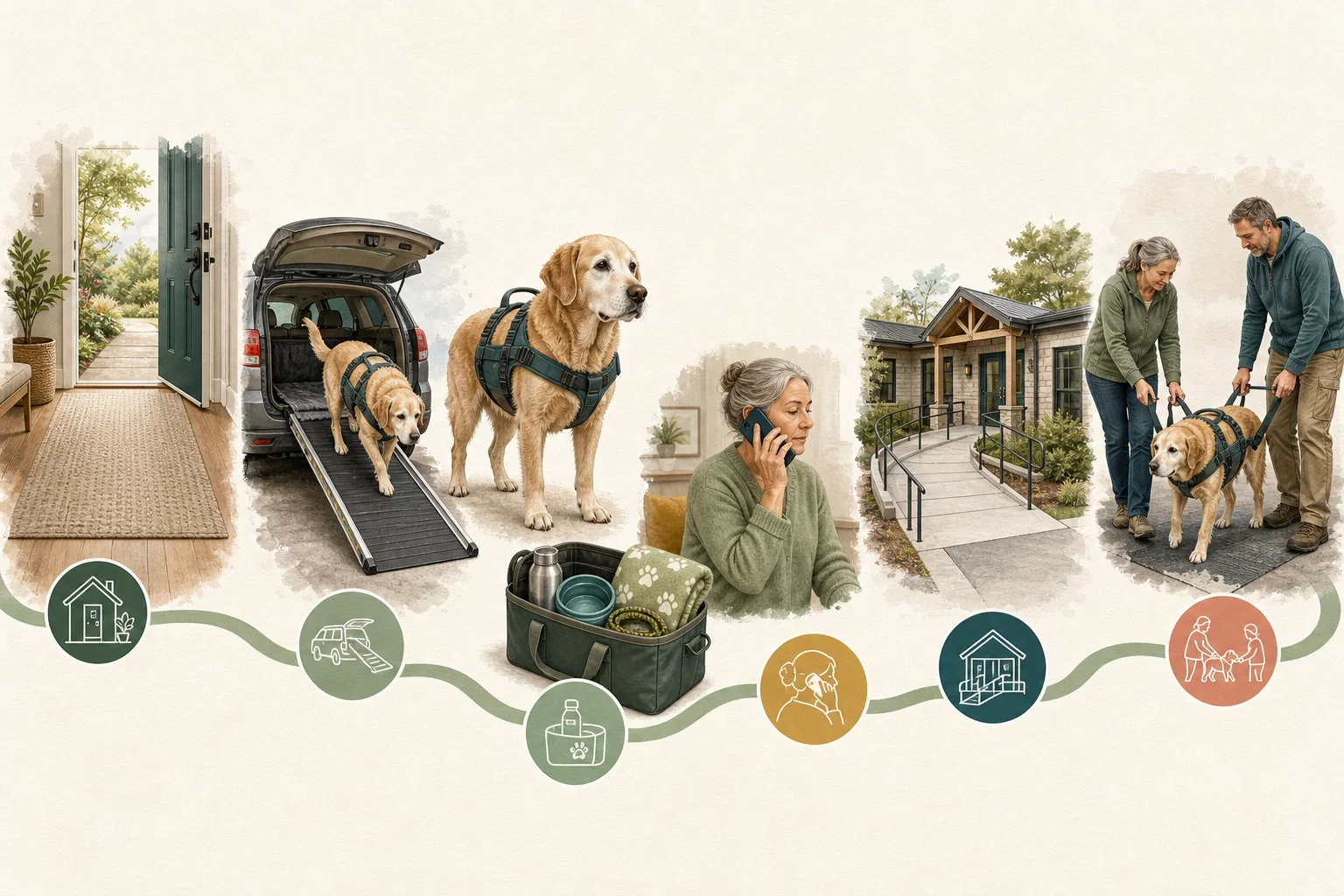
Walk the normal route from your dog's resting area to an exit and identify slick floors, narrow turns, steps, clutter, heavy doors, and places where a dog or caregiver could fall. Create a continuous traction path and keep the route clear. Choose a second exit in case smoke, water, debris, or power loss blocks the first.
Consider how the route works in darkness. Keep a flashlight where it is reachable, use stable lighting that does not create cords across the path, and place leashes, identification, and transport equipment near the planned exit without blocking it.
Practice calmly in ordinary conditions, but do not rehearse repeated stairs, transfers, or movement that causes pain or fear. Ask the veterinary or rehabilitation team to demonstrate any assistance method your dog may need.
Build a mobility-aware go kit
Keep several days of the dog's usual food and water, bowls, waste supplies, bedding, identification, current photo, veterinary records, medication list, and emergency contacts together. Rotate food and medication so dates remain current. Follow prescription storage instructions, especially when refrigeration is required.
Add traction material, a familiar low-profile resting surface, and only the harness or aid already fitted for your dog. Do not buy an emergency sling and assume you will know how to use it safely under stress. Label equipment with the dog's name and your contact information.
Include written details about the dog's weight, mobility limits, pain or fear triggers, communication cues, medication schedule, and the assistance the dog can safely tolerate. A backup caregiver should be able to understand the plan without relying on memory.
Prepare transport and destination options
Confirm which vehicle can accommodate the dog on a stable, non-slip surface with enough room to lie down and turn safely. Secure the dog appropriately and keep them away from airbags and driver controls. Plan how equipment will fit without creating loose projectiles.
List an emergency veterinary hospital, regular clinic, pet-friendly shelter or hotel, and at least one person outside the immediate area. Confirm policies before an emergency; some destinations require vaccination records, crates, or other documentation.
For a large dog or a caregiver with physical limitations, identify additional help in advance. Emergency responders may not be able to provide routine animal transport, and a plan that depends on one person's strength can fail.
Plan for sheltering at home
During power loss or severe weather, keep essential routes short and dry, maintain a comfortable temperature as safely as possible, and prevent access to stairs or damaged areas. Use gates or barriers that remain easy for caregivers to operate.
Maintain the dog's normal medication schedule unless a veterinarian directs otherwise. Never double a missed dose or add human pain medicine. If refrigeration, supply, or access problems threaten the care plan, call the clinic or emergency service for instructions early.
Give a backup caregiver a usable handoff
Walk the backup person through the route, equipment, communication cues, medication list, and emergency contacts before a crisis. Let them observe the dog's normal movement and practice only tasks that are already safe and familiar. Written instructions should identify what the caregiver must not improvise, including lifting, medication changes, or unfamiliar mobility equipment.
Keep the plan accessible if phones lose power or the primary caregiver is unavailable. A printed one-page summary with current contacts, destination options, and the dog's essential needs can prevent delay when stress makes detailed instructions hard to remember.
Owner tool
The mobility emergency readiness check
Review the plan twice a year and whenever mobility, medication, household members, transport, or evacuation destinations change.
| Plan element | Ready evidence | Recheck trigger |
|---|---|---|
| Exit routes | Two clear traction-supported paths | Furniture, season, construction, mobility change |
| Transport | Vehicle space and fitted equipment | New car, new aid, caregiver change |
| Supplies | Food, water, records, medicines, bedding | Expiration or prescription change |
| Contacts | Clinic, emergency hospital, backup caregiver | Phone or location change |
| Destination | Accessible pet-friendly option | Policy, vaccine, or mobility change |
| Handling plan | Professional demonstration for this dog | Pain, strength, balance, or equipment change |
A three-step next action
Prepare
Build the route, kit, contact list, and transport plan around this dog's actual abilities.
Practice
Rehearse calm access and communication without forcing painful handling.
Update
Revise the plan whenever the dog, caregiver, home, vehicle, medication, or destination changes.
Prepare for the visit
Questions to take to your veterinarian
- What signs mean this dog's mobility change is an emergency?
- What assistance method and equipment are safe for this dog's diagnosis and size?
- How should prescriptions be stored and handled during a power outage or evacuation?
- Which emergency facility can accommodate this dog's mobility needs?
Bring the dated observation log, relevant photos or short videos, and a complete list of foods, treats, medications, and supplements. Do not change the routine solely to produce evidence for the visit.
Frequently asked questions
How much food and medication should the kit contain?
Follow local emergency guidance and your veterinary team's advice, rotate supplies, and obey prescription storage and refill rules.
Should I carry my dog during an evacuation?
Only use a handling method that is safe for the dog and caregiver and has been demonstrated for your situation. Improvised lifting can worsen injury.
Can I give extra pain medication during a crisis?
No. Give prescriptions only as directed and contact a veterinarian about missed doses, worsening pain, or access problems.
How often should I update the plan?
Review it at least twice yearly and after any change in mobility, medication, caregiver ability, home layout, vehicle, or destination.
Sources
- Emergency Preparedness for Pets, American Veterinary Medical Association. AVMA emergency-preparedness guidance supports keeping evacuation, supplies, and contact plans ready for pets before a crisis occurs.
- Emergency care and first aid tips for dogs, American Veterinary Medical Association. AVMA first-aid guidance supports knowing basic emergency steps and recognizing when immediate veterinary attention is needed.
- Creating a Comfortable Home for Your Mobility Compromised Dog, VCA Animal Hospitals. VCA guidance on mobility-compromised dogs supports home changes that reduce slipping, strain, and access barriers.
- Pets and Animals in Emergencies, Ready.gov (U.S. DHS). Ready.gov emphasizes pet-inclusive emergency planning, which is especially important for dogs that need assistance moving or evacuating.
Medical disclaimer
Educational information only; contact a veterinarian for diagnosis, treatment, or urgent concerns. If your dog is showing severe, sudden, or rapidly worsening signs, seek urgent veterinary care.
