

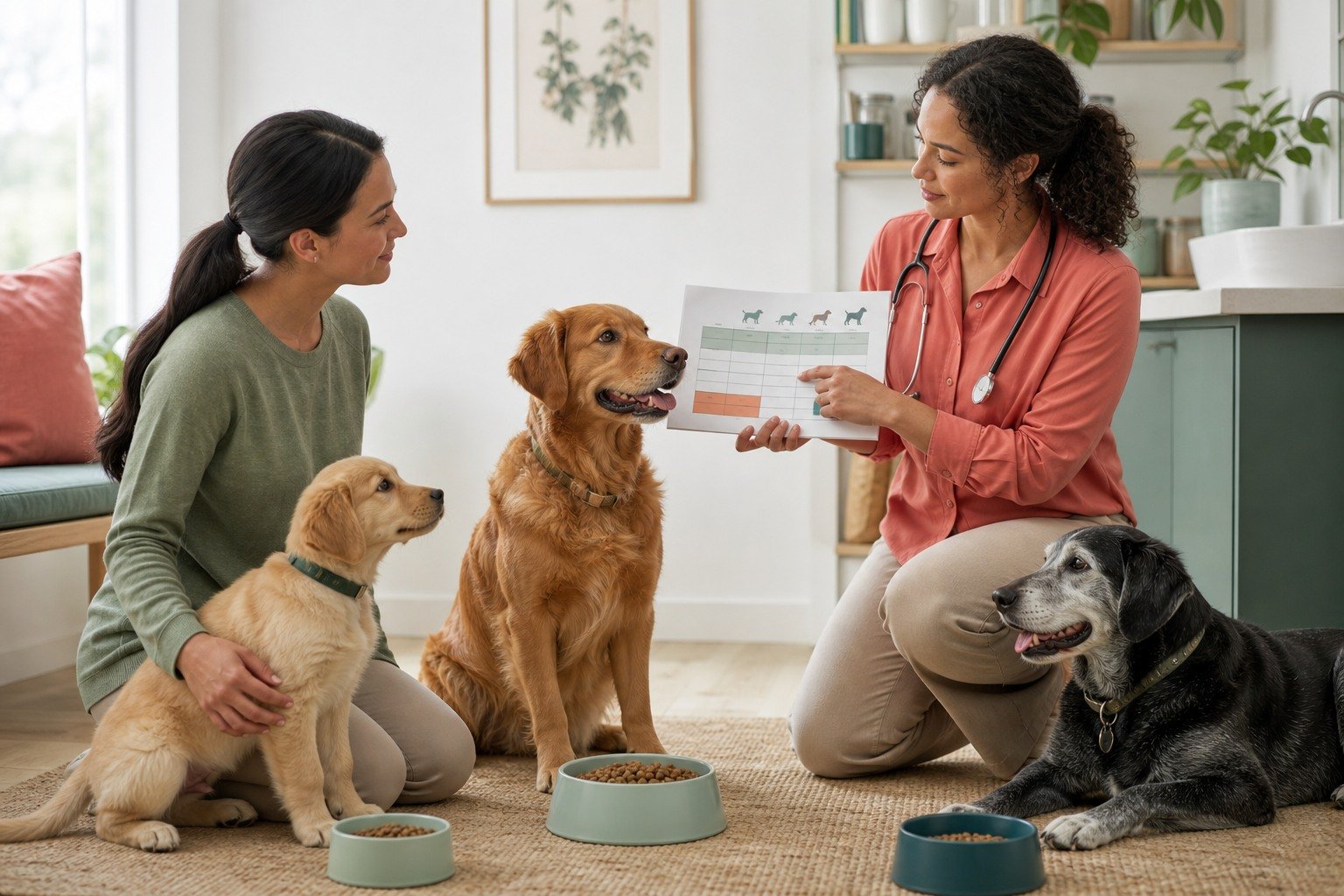
A dog's digestive system and intestinal microbial community develop and change over time, but life stage does not create a simple sequence of good and bad gut bacteria. Puppies face growth, diet transition, vaccination, parasite exposure, social stress, and immature physiologic systems. Adults vary with diet, body condition, environment, medication, travel, and disease. Senior dogs may develop appetite, dental, mobility, organ, sensory, medication, or cognitive changes that alter feeding and elimination. Microbiome studies describe age associations, yet methods, diets, environments, and populations differ, and no consumer test establishes an ideal life-stage microbiome. Breed size also changes growth rate and the timing of maturity and senior transitions, so calendar age cannot define one universal digestive-care stage. Practical care follows the whole dog, complete diet, stool and appetite pattern, growth or muscle trends, exposures, and veterinary findings.
Short answer
Life stage changes the questions, not the need for diagnosis
AAHA life-stage guidance adjusts nutrition, parasite control, examination, body and muscle monitoring, behavior, and screening across development and aging. Microbiome research supports age-related patterns but does not provide a universal home score or life-stage probiotic prescription. [1] [2]
- Record the dog's baseline, current routine, exact diet and products, and any recent change.
- Use observations to support veterinary assessment, not to diagnose or create treatment at home.
- Keep every household member working from the same written plan and product list.
- Agree on measurable outcomes, a review date, and clear urgent-contact signs.
Safety first
Vomiting, blood, dehydration, pain, poor growth, or rapid senior decline needs prompt care
Contact a veterinarian for persistent diarrhea, recurrent vomiting, appetite loss, weight or muscle loss, poor puppy growth, increased thirst, pain, or behavior change. Seek urgent care for collapse, repeated unproductive retching, severe weakness, black or bloody stool, breathing difficulty, suspected obstruction or toxin, or rapid deterioration.
- Do not delay care for sudden, severe, escalating, or function-limiting signs.
- Do not start, stop, combine, divide, or calculate treatment from this article.
- Preserve exact labels, lot information, exposure details, and a concise timeline.
Veterinary note
This article is educational and does not diagnose, treat, prescribe, or replace care from a licensed veterinarian. Your dog’s history, examination, diet, medications, and current signs determine what is appropriate.
Protect growth and development in puppies
Puppies require complete nutrition formulated for growth, with large-breed considerations when relevant. Homemade improvisation, unrestricted mineral supplementation, or frequent diet switching can disrupt nutritional adequacy and make digestive patterns harder to interpret. [3]
Parasites and infectious disease deserve attention because young dogs have frequent environmental and social exposure. Record deworming, fecal testing, vaccination, source, travel, littermate illness, scavenging, diet changes, and every animal affected.
Stool can vary during transition and stress, but poor growth, repeated vomiting, blood, dehydration, fever, or marked lethargy should not be dismissed as a sensitive puppy stomach. Keep exact timelines and seek veterinary guidance.
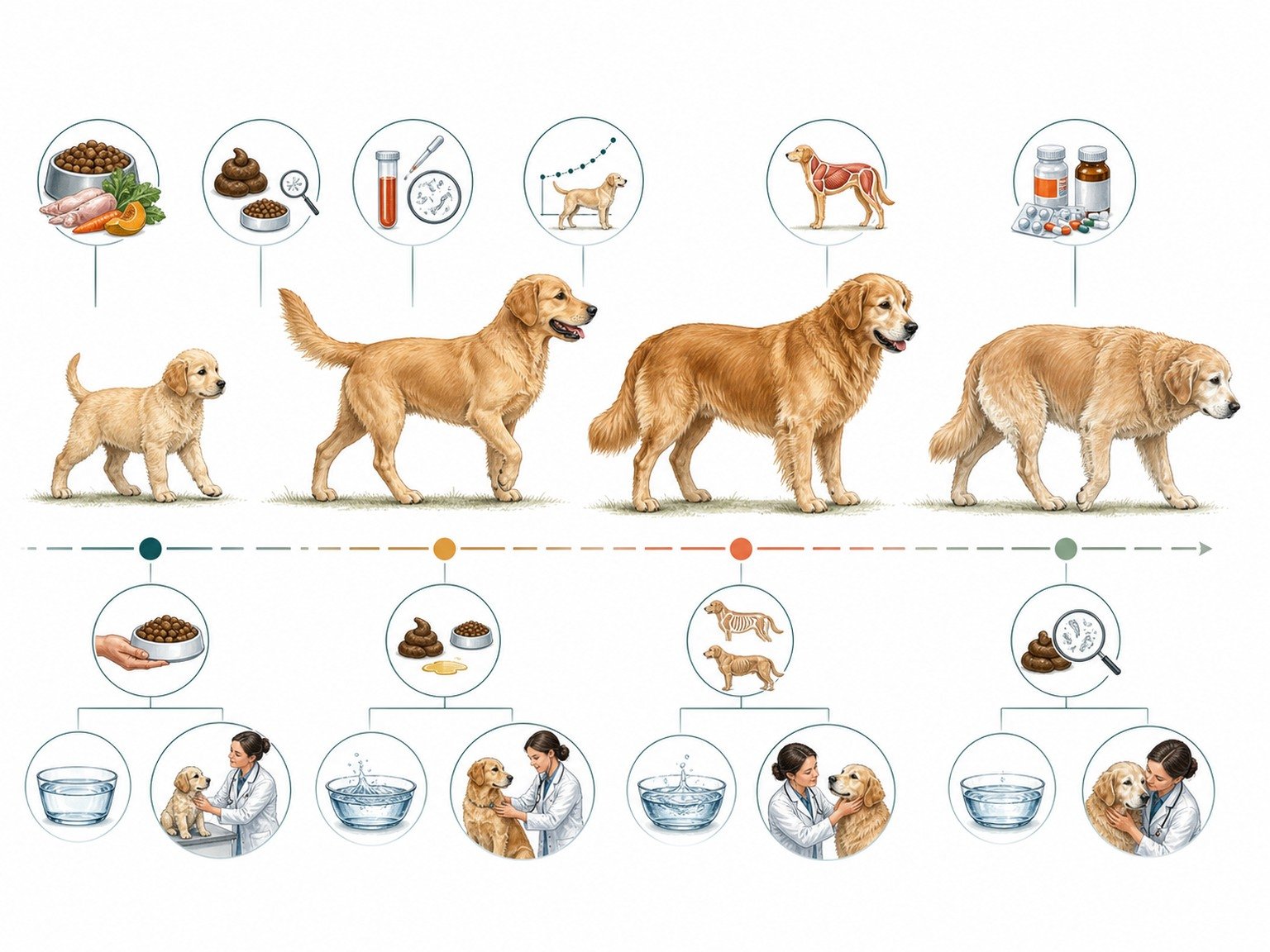
Use adulthood to establish a reliable baseline
For a healthy adult, track normal appetite, meal pattern, stool frequency and character, body weight, body and muscle condition, activity, water, and recovery after routine changes. A stable baseline makes later changes easier to recognize.
Diet, treats, training rewards, table food, supplements, medication, travel, boarding, scavenging, and stress can all influence digestive observations. Change one veterinarian-approved variable at a time when possible so the response remains interpretable.
Adult preventive care still includes parasite risk, dental health, nutrition, behavior, and physical examination. A dog who appears energetic can still have dental pain, obesity, muscle loss, parasites, or chronic disease. [1]
Adapt mature and senior care without blaming age
Older dogs may eat differently because of dental pain, smell or taste change, mobility, cognitive change, medication, nausea, organ disease, or household competition. New digestive signs are not automatically normal aging.
Senior evaluation should include weight and muscle trends because stable scale weight can hide muscle loss and fat gain. Appetite, swallowing, stool, vomiting, thirst, urination, sleep, pain, mobility, and cognition belong in one history. [4]
Diet changes may be appropriate for diagnosed disease or altered energy needs, but senior on a label does not establish that a food fits every older dog. Match the complete formulation and feeding plan to clinical findings.
Interpret microbiome claims cautiously at every age
Studies find age-associated microbial patterns, but age is entangled with diet, environment, medication, health, geography, and sampling. Association cannot establish that a particular organism caused health or disease. [2]
A stool microbiome report cannot replace examination, parasite testing, diet history, or other diagnostic work. A diversity score is not a life-stage target, and a probiotic result for one strain or population cannot be generalized.
If a diet, fiber, prebiotic, or probiotic trial is considered, define the clinical problem, exact formulation, baseline, outcome, adverse signs, and reassessment. Do not use a gut-health product to delay care.
Prepare for a focused veterinary conversation
Bring a concise timeline, short natural-movement or symptom videos when safe, the exact names and photographs of every food, treat, medication, and supplement label, and notes about appetite, water intake, stool, sleep, activity, comfort, and behavior. Include recent injuries, travel, boarding, diet changes, missed medication, and previous test results. A complete record helps the veterinary team separate a repeatable pattern from a single impression.
Decide in advance what you need from the visit: an urgency decision, a diagnosis plan, a nutrition review, a pain or mobility assessment, or a monitored trial. Ask what result would change the plan and what finding would rule an option out. This keeps research and product information in the right role. Evidence can shape questions and expectations, but it cannot determine what is safe for an individual dog without the history and examination.
Owner tool
Track digestive health by life stage
On a phone, swipe across the table to see every column.
| Checkpoint | Record | Why it helps |
|---|---|---|
| Puppy | Growth, diet, vaccines, parasites | Protects development |
| Adult | Baseline stool, intake, body condition | Shows change |
| Senior | Muscle, appetite, drugs, function | Prevents age dismissal |
| All stages | Timeline, whole-dog signs, review | Guides care |
Better questions, calmer next steps
Questions to ask your veterinarian
- Is the diet complete for this life stage?
- Which parasite and exposure risks matter now?
- Are weight and muscle changing appropriately?
- Could disease, medication, dental pain, or stress contribute?
- What pattern requires testing or reassessment?
FAQ
Do puppies naturally have a weaker gut?
They have developmental and exposure considerations, not one universal weak-gut state.
Should adult dogs change food regularly?
Not without a reason and transition plan.
Is diarrhea normal in senior dogs?
No. New or persistent signs need evaluation.
Can a microbiome test identify the best food?
Not by itself.
Does every life stage need a probiotic?
No. Use must match a defined problem and evidence.
Sources
- American Animal Hospital Association: Canine Life Stage Guidelines. Life-stage assessment and preventive care.
- Frontiers in Microbiology: Age-Related Changes in the Canine Gut Microbiome. Age associations and research limits.
- Merck Veterinary Manual: Nutritional Requirements of Small Animals. Growth and adult nutrition.
- American Animal Hospital Association: Senior Care Guidelines. Senior function, nutrition, and disease assessment.
- World Small Animal Veterinary Association: Global Nutrition Guidelines. Nutrition history and assessment.
