


Dogs may startle at a sudden sound, but a clinically important noise problem is more than one jump or bark. Intensity, persistence, anticipation, escape behavior, generalization, recovery, and effects on normal life matter. Noise responses can also interact with pain, sensory change, other fears, and learning history, which is why a veterinary history and humane behavior assessment are central.
Short answer
The pattern and recovery distinguish a startle from a welfare problem
Noise fear can involve fireworks, thunder, gunshots, construction, alarms, appliances, traffic, or other sounds. Signs range from vigilance and food refusal to trembling, panting, hiding, vocalizing, elimination, destruction, and dangerous escape. No single sign diagnoses a phobia, and severity varies. Persistent, escalating, or unsafe responses deserve veterinary assessment. [1] [2]
- Record the exact sound, context, distance, early body-language change, peak response, and time to recover.
- Provide a secure retreat and reduce exposure when possible; do not punish fear or force the dog toward the sound.
- Ask the veterinarian to consider pain, sensory change, medical illness, concurrent behavior conditions, and treatment timing.
Safety first
Escape and prolonged distress are immediate safety concerns
Seek prompt veterinary help for self-injury, frantic escape, collapse, breathing difficulty, prolonged inability to settle, refusal of food or water, new disorientation, a sudden major behavior change, or fear that prevents necessary care. Contact emergency services for severe injury, heat exposure, toxin ingestion, or another acute crisis.
- Secure doors, windows, yards, gates, and identification before a predictable noise event.
- Do not use punishment, startling devices, leash corrections, or overwhelming exposure to stop fearful behavior.
- Do not give human sedatives, leftover medication, cannabis products, or unreviewed supplements.
Veterinary note
This article is educational and does not diagnose, treat, prescribe, or replace care from a licensed veterinarian. Your dog’s history, examination, diet, medications, and current signs determine what is appropriate.
Read the full response sequence
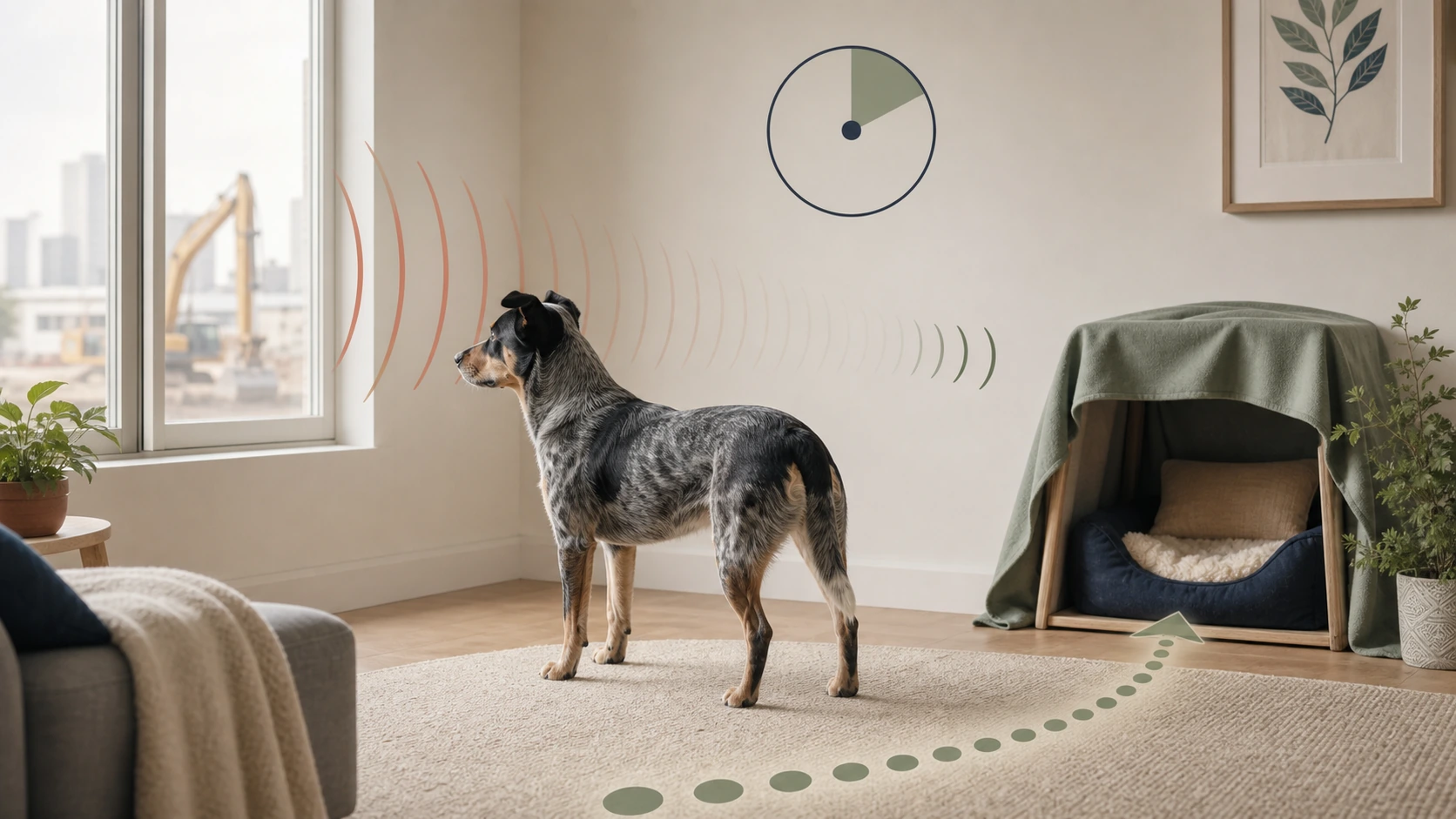
The earliest signs may be subtle: scanning, ears held back, a closed mouth, reduced exploration, leaning away, shadowing a person, leaving a room, or refusing a familiar reward. Later signs can include pacing, trembling, panting, drooling, vocalizing, hiding, elimination, destruction, or escape. Recovery may take minutes or hours. [1]
A useful record includes onset, sound type, weather or visual cues, location, distance, predictability, duration, other animals or people, appetite, sleep, medication, pain signs, and recovery. A video captured without prolonging exposure can help, but safety takes priority.
Consider why a response may change
Age, genetics, early experience, previous frightening events, repeated exposure, and comorbid fears may influence noise sensitivity. A large Finnish owner survey found noise sensitivity commonly reported and associated with age, breed, and other anxiety traits, but a convenience survey cannot supply an individual diagnosis or universal prevalence. [2]
Pain can change how a dog responds. A qualitative clinical study found differences in histories of noise-sensitive dogs with and without musculoskeletal pain, supporting pain assessment in some cases without proving that pain causes every noise fear. Hearing or cognitive change, gastrointestinal discomfort, and other illness may also alter coping. [3]
Build safety before behavior work
Before a forecast event or scheduled construction, prepare identification, secure exits, a familiar interior retreat, background sound if the dog tolerates it, water, and a calm route for toileting. Let the dog choose proximity or distance. Comfort offered calmly does not reward an involuntary emotion, but crowding or restraining a dog can increase risk.
Behavior work uses carefully controlled exposure below the level that triggers distress, paired with outcomes the dog values. The starting volume, duration, distance, and context must be easy enough for learning. Flooding or forcing exposure can intensify fear. AVSAB supports reward-based, least-aversive methods and opposes aversive training. [4]
Understand the veterinary plan
The veterinarian evaluates medical contributors, pattern, severity, predictability, safety, and coexisting behavior concerns. Management, behavior modification, and medication may be combined. Treatment timing matters because a dog already in panic may be unable to learn, but this article cannot select or dose medication.
Noise recordings do not perfectly reproduce pressure changes, vibration, visual flashes, or real-world unpredictability. Generalization should therefore be assessed carefully. A credentialed behavior professional may help when the response is severe, complex, generalized, or unsafe. [1] [5]
Improvement may mean lower intensity, faster recovery, safer choices, restored eating, or fewer contexts affected, not total absence of startle. Revisit the plan after new pain, sensory or cognitive changes, medication changes, or worsening episodes. Keep the record consistent across events so small changes remain visible.
Prepare for a focused veterinary conversation
Bring a concise timeline, short natural-movement or symptom videos when safe, the exact names and photographs of every food, treat, medication, and supplement label, and notes about appetite, water intake, stool, sleep, activity, comfort, and behavior. Include recent injuries, travel, boarding, diet changes, missed medication, and previous test results. A complete record helps the veterinary team separate a repeatable pattern from a single impression.
Decide in advance what you need from the visit: an urgency decision, a diagnosis plan, a nutrition review, a pain or mobility assessment, or a monitored trial. Ask what result would change the plan and what finding would rule an option out. This keeps research and product information in the right role. Evidence can shape questions and expectations, but it cannot determine what is safe for an individual dog without the history and examination.
Owner tool
Build a useful noise-event record
On a phone, swipe across the table to see every column.
| Observation | Record | Why it matters |
|---|---|---|
| Trigger | Sound, distance, duration, predictability | Defines exposure |
| Early sign | First posture or behavior change | Shows threshold |
| Peak | Escape, hiding, trembling, refusal | Shows severity |
| Recovery | Time and function restored | Tracks welfare and progress |
Better questions, calmer next steps
Questions to ask your veterinarian
- Could pain, sensory change, or illness be contributing?
- Which early signs show my dog's response threshold?
- How should we prepare for predictable events?
- What humane behavior plan fits this trigger pattern?
- When is veterinary behavior referral appropriate?
FAQ
Is every startle a phobia?
No. Intensity, anticipation, persistence, recovery, avoidance, and disruption of normal life help define concern.
Should I ignore a frightened dog?
No. Offer access to safety and calm support while respecting the dog's choice for distance.
Will louder exposure make a dog adapt?
Overwhelming exposure can worsen fear; behavior work should remain below the distress threshold.
Can pain affect noise sensitivity?
Pain may contribute in some dogs and deserves veterinary assessment, especially with a changed pattern.
Do supplements replace a behavior plan?
No. Evidence varies, and products do not replace assessment, safety management, or behavior care.
Sources
- Frontiers in Veterinary Science: Therapy and Prevention of Noise Fears in Dogs. Terminology, assessment, prevention, and evidence limits.
- Scientific Reports: Canine Anxiety in 13,700 Finnish Pet Dogs. Owner-reported patterns, comorbidity, age, and breed associations.
- Frontiers in Veterinary Science: Noise Sensitivities with and without Musculoskeletal Pain. Pain-assessment rationale and study limitations.
- American Veterinary Society of Animal Behavior: Position Statements. Humane reward-based behavior guidance.
- Cornell University College of Veterinary Medicine: Fear of Fireworks and Thunderstorms. Owner safety planning and veterinary-care context.
