

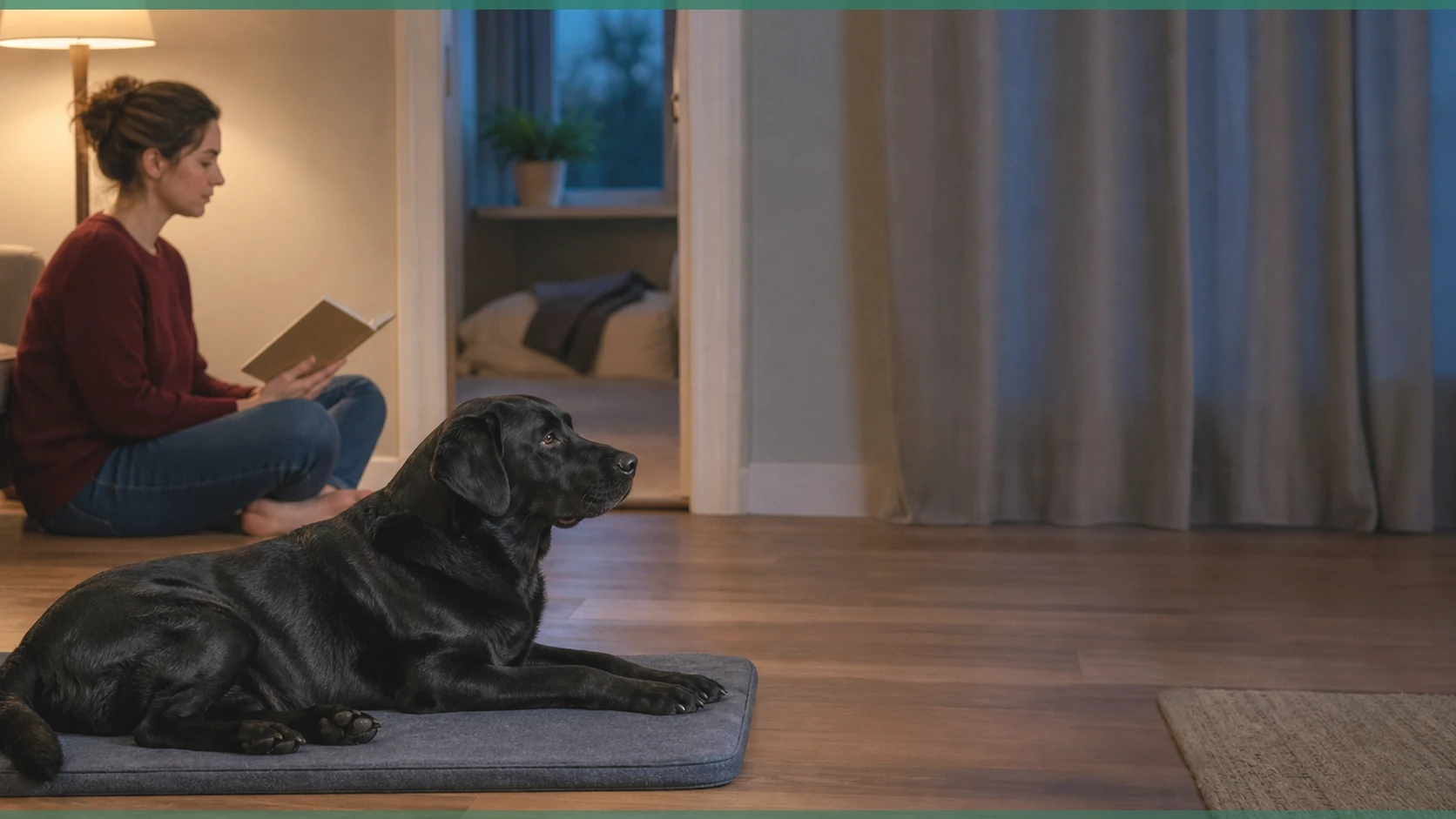
A calm, evidence-aware framework for interpret age-related stress and anxiety behaviors without presuming diagnosis in dogs, with practical owner observations and clear professional-care boundaries.
Short answer
Use a repeatable plan and keep veterinary care in the lead
Enable owners to frame anxiety and stress behaviors as life-stage and environment-specific patterns rather than presumptive diagnoses. The practical goal is simple: ability to track and describe anxiety patterns to a veterinarian using life-stage, season, and event-based context. Keep veterinary care in the lead, record patterns rather than isolated moments, and stop the routine when pain, distress, or urgent signs appear.
- Record the confirmed diagnoses, monitoring instructions, medication list, and follow-up schedule.
- Describe appetite, water, elimination, weight, movement, sleep, behavior, and comfort.
- Use the same measurements and descriptions at the interval requested by the clinic.
- Note doses, missed doses, diet, supplements, activity, stress, and unusual exposures.
Safety first
Stop the routine when the dog needs professional care
Owners should consult a veterinarian promptly if stress or anxiety-like behaviors appear suddenly, are severe, or are accompanied by signs of pain, neurological abnormalities, gastrointestinal upset, or changes in appetite or sleep. Behaviors such as aggression, self-injury, persistent vocalization, disorientation, or loss of housetraining in senior dogs can indicate medical or cognitive issues and warrant veterinary evaluation rather than being assumed to be normal aging. If a dog’s anxiety behaviors escalate to panic, escape attempts, or risk of harm to people or other animals, urgent veterinary or emergency behavioral assessment is recommended.
Veterinary note
Educational information only; contact a veterinarian for diagnosis, treatment, or urgent concerns. This guide supports observation and preparation; it does not diagnose a condition or replace an individualized care plan.
What is reasonably supported
Use repeated observations to improve the veterinary conversation
Age-associated behavioral changes in dogs can include altered social interactions, activity levels, cognition, and elimination patterns, and these… From JAVMA article describing categories of age-related… Exploratory work in senior dogs suggests interactions between pain, microbiota composition, immune dysregulation, and behavior, indicating that some… Based on a recent Frontiers in Behavioral… Age-related changes in gut microbiota and short-chain fatty acid profiles have been associated with differences in behavioral biomarkers… Derived from a PubMed-indexed study on gut… Veterinary assessment of older dogs includes querying owners about changes in activity, appetite, and general behavior, since deviations… From guidance on evaluating general behavior and…
What remains uncertain
Home observations cannot establish the cause
Does not classify individual dogs with anxiety disorders or prescribe behavioral or pharmacologic treatment plans. Frames stress and anxiety behaviors in relation to aging and environment but stresses that only veterinarians or veterinary behaviorists can diagnose medical or behavioral conditions. Does not provide detailed training protocols or guarantee behavior change outcomes. Limited longitudinal data linking specific changes in age-related microbiota profiles directly to everyday stress and anxiety behaviors in pet dogs. Behavioral categories of aging dogs are still being refined, and many normal and pathological patterns overlap, making clear home differentiation challenging.
Start with the veterinary plan
Begin with the dog's own normal pattern so a meaningful change is easier to recognize. For interpreting age-related stress and anxiety behaviors in dogs without presuming a diagnosis, the accepted research supports a bounded point: Age-associated behavioral changes in dogs can include altered social interactions, activity levels, cognition, and elimination patterns, and these may occur even without clinically diagnosed disease, affecting… From JAVMA article describing categories of age-related behavioral changes and their impact. This evidence guides observation and a veterinary conversation; it does not establish a diagnosis, treatment response, or guaranteed result.
In practice, record the confirmed diagnoses, monitoring instructions, medication list, and follow-up schedule. Record the date, frequency, context, and related changes. Home observations must not reinterpret a diagnosis. Compare the dog with their own baseline and contact the veterinary team when the pattern is persistent, progressive, painful, or joined by the red-flag signs above.
Establish the dog's current baseline
Separate observation from interpretation: describe what happened before deciding what it might mean. For interpreting age-related stress and anxiety behaviors in dogs without presuming a diagnosis, the accepted research supports a bounded point: Exploratory work in senior dogs suggests interactions between pain, microbiota composition, immune dysregulation, and behavior, indicating that some stress-like behaviors in older dogs may reflect underlying… Based on a recent Frontiers in Behavioral Neuroscience study on senior dog behavioral… This evidence guides observation and a veterinary conversation; it does not establish a diagnosis, treatment response, or guaranteed result.
In practice, describe appetite, water, elimination, weight, movement, sleep, behavior, and comfort. Record the date, frequency, context, and related changes. Baseline varies with the individual and stage of disease. Compare the dog with their own baseline and contact the veterinary team when the pattern is persistent, progressive, painful, or joined by the red-flag signs above.
Track the targeted signs
Consistency improves the value of a home record, even when the measurement is simple. For interpreting age-related stress and anxiety behaviors in dogs without presuming a diagnosis, the accepted research supports a bounded point: Age-related changes in gut microbiota and short-chain fatty acid profiles have been associated with differences in behavioral biomarkers in dogs, underscoring that age and physiology can… Derived from a PubMed-indexed study on gut health and behavioral biomarkers across ages… This evidence guides observation and a veterinary conversation; it does not establish a diagnosis, treatment response, or guaranteed result.
In practice, use the same measurements and descriptions at the interval requested by the clinic. Record the date, frequency, context, and related changes. More frequent checking is not always more informative. Compare the dog with their own baseline and contact the veterinary team when the pattern is persistent, progressive, painful, or joined by the red-flag signs above.
Record treatment and routine context
The setting around a sign can matter as much as the sign itself. For interpreting age-related stress and anxiety behaviors in dogs without presuming a diagnosis, the accepted research supports a bounded point: Veterinary assessment of older dogs includes querying owners about changes in activity, appetite, and general behavior, since deviations from a dog’s usual pattern can signal pain,… From guidance on evaluating general behavior and status in wellness exams of aged… This evidence guides observation and a veterinary conversation; it does not establish a diagnosis, treatment response, or guaranteed result.
In practice, note doses, missed doses, diet, supplements, activity, stress, and unusual exposures. Record the date, frequency, context, and related changes. Never change treatment to test a theory. Compare the dog with their own baseline and contact the veterinary team when the pattern is persistent, progressive, painful, or joined by the red-flag signs above.
Watch for combined change
A checklist supports attention; it does not prove that a risk is gone or explain a medical concern. For interpreting age-related stress and anxiety behaviors in dogs without presuming a diagnosis, the accepted research supports a bounded point: Age-associated behavioral changes in dogs can include altered social interactions, activity levels, cognition, and elimination patterns, and these may occur even without clinically diagnosed disease, affecting… From JAVMA article describing categories of age-related behavioral changes and their impact. This evidence guides observation and a veterinary conversation; it does not establish a diagnosis, treatment response, or guaranteed result.
In practice, connect the target sign with energy, breathing, vomiting, pain, confusion, and recovery. Record the date, frequency, context, and related changes. Several mild changes together may be meaningful. Compare the dog with their own baseline and contact the veterinary team when the pattern is persistent, progressive, painful, or joined by the red-flag signs above.
Use planned and unplanned checkpoints
Shared language and one current record help multiple caregivers act consistently. For interpreting age-related stress and anxiety behaviors in dogs without presuming a diagnosis, the accepted research supports a bounded point: Exploratory work in senior dogs suggests interactions between pain, microbiota composition, immune dysregulation, and behavior, indicating that some stress-like behaviors in older dogs may reflect underlying… Based on a recent Frontiers in Behavioral Neuroscience study on senior dog behavioral… This evidence guides observation and a veterinary conversation; it does not establish a diagnosis, treatment response, or guaranteed result.
In practice, send routine summaries and contact the clinic sooner when the pattern changes. Record the date, frequency, context, and related changes. The calendar should not delay necessary care. Compare the dog with their own baseline and contact the veterinary team when the pattern is persistent, progressive, painful, or joined by the red-flag signs above.
Owner tool
Interpreting Age-Related Stress and Anxiety Behaviors in Dogs Without Presuming a Diagnosis
Use this educationalplanning as a repeatable record for interpret age-related stress and anxiety behaviors without presuming diagnosis in dogs. Mark what is normal, what changed, and what needs veterinary guidance.
| Checkpoint | Owner action | Safety boundary |
|---|---|---|
| Start with the veterinary plan | record the confirmed diagnoses, monitoring instructions, medication list, and follow-up schedule | Home observations must not reinterpret a diagnosis |
| Establish the dog's current baseline | describe appetite, water, elimination, weight, movement, sleep, behavior, and comfort | Baseline varies with the individual and stage of disease |
| Track the targeted signs | use the same measurements and descriptions at the interval requested by the clinic | More frequent checking is not always more informative |
| Record treatment and routine context | note doses, missed doses, diet, supplements, activity, stress, and unusual exposures | Never change treatment to test a theory |
| Watch for combined change | connect the target sign with energy, breathing, vomiting, pain, confusion, and recovery | Several mild changes together may be meaningful |
| Use planned and unplanned checkpoints | send routine summaries and contact the clinic sooner when the pattern changes | The calendar should not delay necessary care |
| Prepare for urgent escalation | keep contacts, records, transport, and the current medication list ready | Collapse, seizures, breathing difficulty, severe pain, or rapid decline is urgent |
A three-step next action
Observe
Complete the interpreting age-related stress and anxiety behaviors in dogs without presuming a diagnosis review without provoking a symptom or forcing the dog through difficulty.
Record
Keep dates, measurements, photographs, short natural-behavior videos, product labels, and caregiver notes together.
Escalate
Share the concise pattern with the veterinary team and seek urgent care for severe or rapidly worsening signs.
Prepare for the visit
Questions to take to your veterinarian
- Which parts of this interpreting age-related stress and anxiety behaviors in dogs without presuming a diagnosis plan matter most for this dog?
- What findings need a routine appointment, a same-day call, or emergency care?
- Could current diagnoses, medications, diet, supplements, pain, vision, hearing, or mobility change the plan?
- What should I measure at home, and how often should I reassess it?
- Which change should make me stop the routine and contact you sooner?
Bring the dated observation log, relevant photos or short videos, and a complete list of foods, treats, medications, and supplements. Do not change the routine solely to produce evidence for the visit.
Frequently asked questions
Can this guide diagnose a health or behavior problem?
No. It organizes observations and questions; diagnosis requires veterinary assessment.
How often should I repeat the routine?
Use the interval recommended by the veterinary team and repeat sooner after a meaningful change.
Should I change several things at once?
Usually not unless the veterinary team directs it. Multiple changes make response and risk harder to interpret.
What should I bring to the appointment?
Bring the dated log, relevant photos or videos, and complete food, medication, supplement, and product information.
Sources
- The phenotype of aging in the dog: how aging impacts the health and well-being of dogs and their caregivers, Journal of the American Veterinary Medical Association (JAVMA). Age-associated behavioral changes in dogs can include altered social interactions, activity levels, cognition, and elimination patterns, and these may occur even without clinically diagnosed disease, affecting comfort and quality of…
- An exploratory study of behavioral, cognitive, physiological, and microbiota profiles in senior dogs, Frontiers in Behavioral Neuroscience. Exploratory work in senior dogs suggests interactions between pain, microbiota composition, immune dysregulation, and behavior, indicating that some stress-like behaviors in older dogs may reflect underlying physical discomfort or systemic…
- Age-Related Changes in Gut Health and Behavioral Biomarkers in a Beagle Dog Population, PubMed / Animals (MDPI). Age-related changes in gut microbiota and short-chain fatty acid profiles have been associated with differences in behavioral biomarkers in dogs, underscoring that age and physiology can influence behavior and that…
- Defining healthy aging in older dogs and differentiating age-related changes from disease, Journal of the American Veterinary Medical Association (JAVMA). Veterinary assessment of older dogs includes querying owners about changes in activity, appetite, and general behavior, since deviations from a dog’s usual pattern can signal pain, neurologic disease, or systemic…
Medical disclaimer
Educational information only; contact a veterinarian for diagnosis, treatment, or urgent concerns. If your dog is showing severe, sudden, or rapidly worsening signs, seek urgent veterinary care.
