

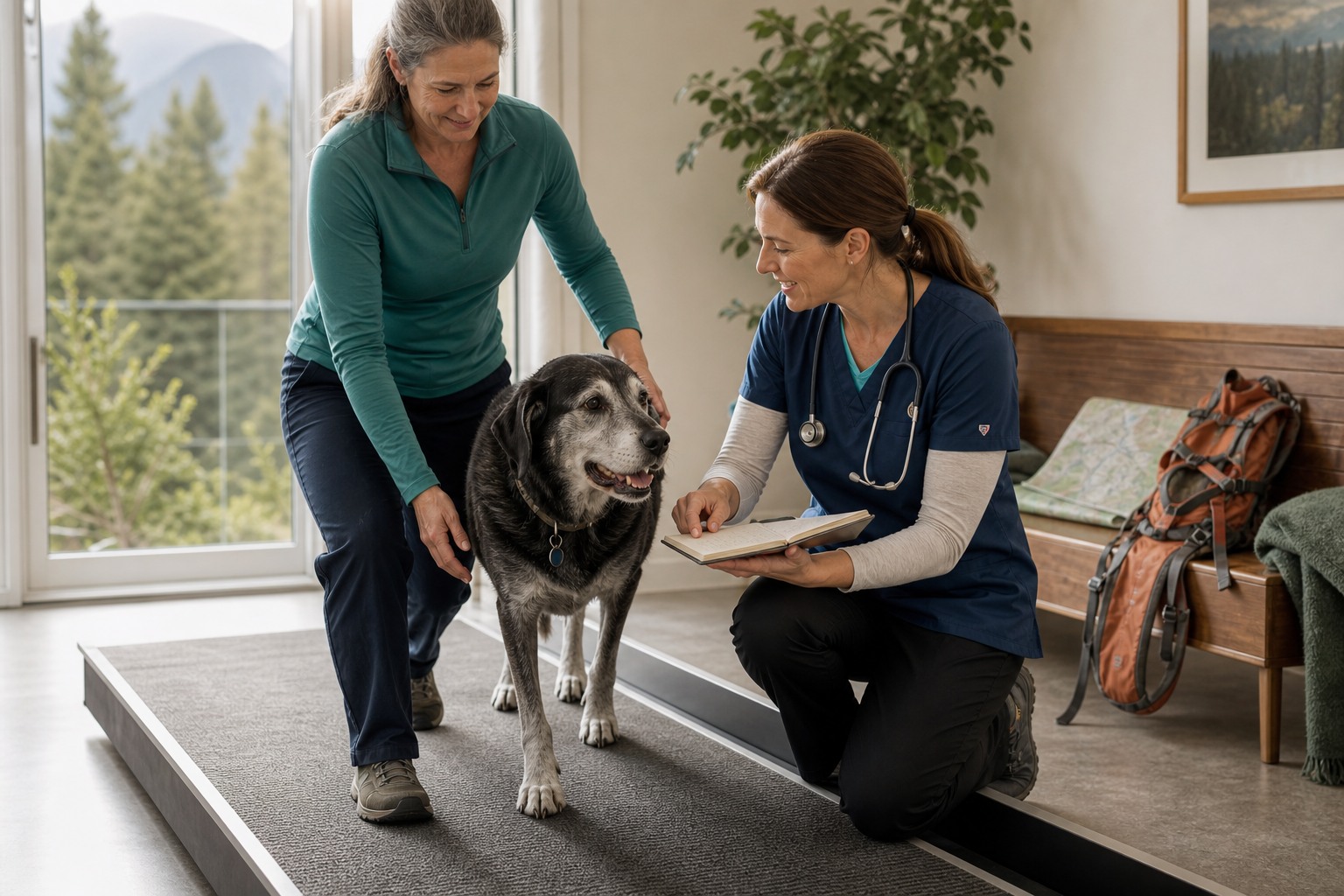
A dog who once hiked, ran, swam, worked, or played intensely may shorten outings, hesitate, recover slowly, sleep differently, change technique, avoid equipment, or lose interest. That transition can reflect normal adaptation, but it can also involve pain, orthopedic or neurologic disease, heart or breathing problems, endocrine or systemic illness, sensory change, cognitive dysfunction, medication effects, or accumulated fatigue. Motivation can mask discomfort, and one quiet day does not diagnose decline. Compare the dog with its own baseline and record context. Stop demanding former performance while the cause is assessed. The goal is not to preserve a sport identity at any cost or to remove all activity automatically; it is to identify what changed, protect comfort, and build meaningful movement and enrichment around current capacity with veterinary guidance.
Short answer
Slowing down is a finding, not a diagnosis
AAHA senior guidance warns against dismissing changes as merely old age, and chronic-pain guidance uses owner observations of function and behavior. Cornell lists reduced activity, stiffness, difficulty rising, and behavior change among osteoarthritis clues, but similar changes can have other causes. [1] [2] [3]
- Start with the individual dog's baseline, complete history, and veterinary plan.
- Track change across function, comfort, appetite, sleep, and behavior instead of blaming age or breed.
- Use environment and routine as coordinated supports, not substitutes for diagnosis or care.
- Escalate sudden, severe, persistent, or rapidly worsening signs promptly.
Safety first
Stop activity for collapse, breathing distress, severe pain, or neurologic change
Seek urgent care for collapse, breathing difficulty, pale or blue gums, severe or rapidly worsening pain, inability to stand, non-weight-bearing lameness, major trauma, weakness, dragging limbs, loss of coordination, heat illness, or sudden confusion. Do not test the dog again, stretch a painful limb, or give human medication.
- Do not use this article to diagnose anxiety, pain, cognitive change, or organ disease.
- Do not change prescribed medication, diet, or activity because of a general age or breed rule.
- Seek urgent veterinary care for collapse, breathing difficulty, severe pain, major trauma, or rapid decline.
Veterinary note
This article is educational and does not diagnose, treat, prescribe, or replace care from a licensed veterinarian. Your dog’s history, examination, diet, medications, and current signs determine what is appropriate.
Define exactly what has changed
Compare route, distance, pace, terrain, surface, weather, stairs, jumping, turning, play, vehicle access, rising, toileting, and recovery. Record whether the change is sudden or gradual, consistent or variable, one-sided or general, and whether it appears during activity, after rest, or the next day.
Observe posture, stride, foot placement, muscle symmetry, panting outside expected heat or effort, cough, appetite, water, weight, sleep, willingness, irritability, withdrawal, confusion, and medication timing. Short natural video can help when it does not require repeating a painful task.
Owner-reported outcome tools can structure function observations, but their measurement quality and purpose vary. [4] Use the instrument the veterinary team selects and do not turn a score into a diagnosis or treatment threshold by yourself.
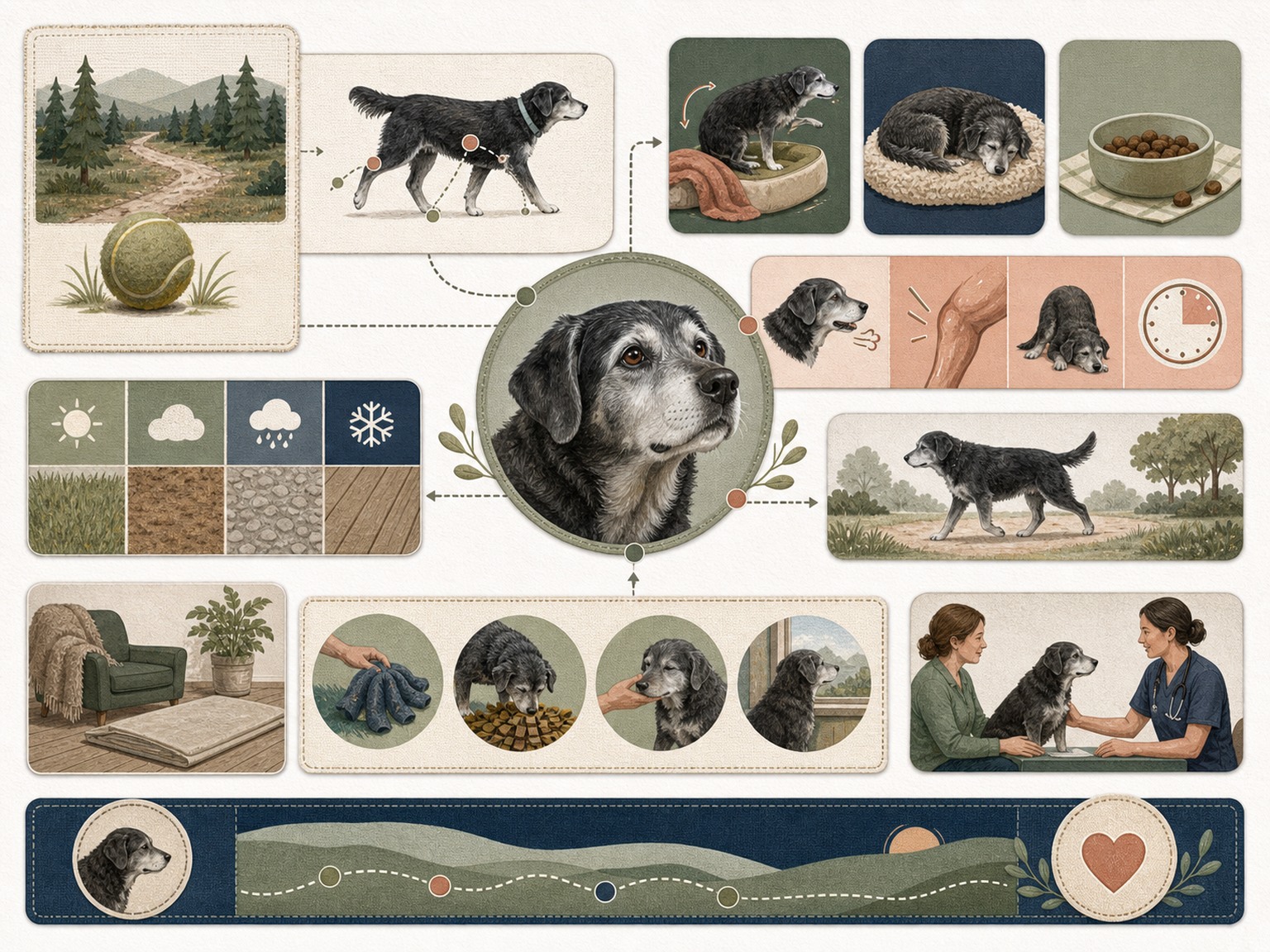
Investigate pain and medical contributors
Chronic pain may appear as reduced activity, changed behavior, sleep disruption, posture, difficulty rising, or reluctance rather than crying. AAHA recommends combining owner observations, examination, and repeated reassessment. [2] Report the dog's former and current function, not only a limp.
Osteoarthritis is one possibility, especially in a dog with prior injury or joint disease, but heart, lung, endocrine, neurologic, gastrointestinal, dental, sensory, infectious, neoplastic, and medication-related problems can also reduce activity. [3] The veterinarian determines the examination and diagnostics.
Do not assume deconditioning is the only cause and prescribe more exercise. A dog who seems better after warming up can still have pain. A dog who refuses an activity may be protecting the body, struggling to breathe, confused, nauseated, or fearful.
Adapt goals without removing the dog's identity
List what the dog appears to value: sniffing outdoors, exploring, retrieving gently, water access, social contact, training simple choices, riding to a quiet place, or resting near family. Meaningful participation can change form without becoming meaningless.
Use the veterinary or rehabilitation plan to adjust duration, surface, speed, repetitions, equipment, and rest. Avoid copying another dog's exercise list or setting a universal senior walk target. Monitor comfort during, immediately after, and the following day.
Improve traction, clear paths, provide accessible rest, and manage stairs or vehicle entry based on assessed need. An aid must be stable, fitted, and usable by the caregiver. Environment changes support function but do not diagnose or treat the underlying condition.
Track recovery and revise the plan
Create a simple baseline for rising, gait, favorite activity, appetite, sleep, toileting, breathing, social engagement, and next-day function. Record both good and difficult days plus weather, surface, travel, medication, and unusual events. Trends are more useful than a single dramatic clip.
Set a recheck interval and earlier-call threshold. If the dog progressively loses endurance, needs longer recovery, develops new pain or behavior change, or cannot perform essential tasks, reassess instead of narrowing the routine further without explanation.
AAHA senior-friendly care emphasizes written patient-specific instructions and avoiding the catch-all phrase old age. [1] Ask what outcome each treatment targets, how success or adverse effects will be measured, and what alternative preserves welfare if the prior goal is no longer realistic.
Prepare for a focused veterinary conversation
Bring a concise timeline, short natural-movement or symptom videos when safe, the exact names and photographs of every food, treat, medication, and supplement label, and notes about appetite, water intake, stool, sleep, activity, comfort, and behavior. Include recent injuries, travel, boarding, diet changes, missed medication, and previous test results. A complete record helps the veterinary team separate a repeatable pattern from a single impression.
Decide in advance what you need from the visit: an urgency decision, a diagnosis plan, a nutrition review, a pain or mobility assessment, or a monitored trial. Ask what result would change the plan and what finding would rule an option out. This keeps research and product information in the right role. Evidence can shape questions and expectations, but it cannot determine what is safe for an individual dog without the history and examination.
Owner tool
Build a former-activity transition log
On a phone, swipe across the table to see every column.
| Checkpoint | What to record | Why it helps |
|---|---|---|
| Then and now | Task, pace, terrain, technique | Defines change |
| Whole dog | Pain, breath, appetite, sleep, behavior | Widens context |
| Recovery | Immediate, evening, next day | Tests tolerance |
| Adaptation | Goal, support, outcome, recheck | Protects meaning |
Better questions, calmer next steps
Questions to ask your veterinarian
- What medical causes should be assessed before calling this aging?
- Which observations suggest pain, breathing, or neurologic change?
- What current activities remain comfortable and meaningful?
- Which milestones should govern progression or reduction?
- When should rehabilitation or specialist referral be considered?
FAQ
Is slowing down always arthritis?
No. Many medical, sensory, behavioral, and environmental factors can contribute.
Should I stop all exercise?
Use an individual veterinary plan; complete inactivity may not be appropriate.
Can enthusiasm rule out pain?
No. Motivated dogs can work through discomfort.
Will a joint supplement restore former performance?
No supplement guarantees performance or replaces diagnosis.
How do I know an adapted activity is working?
Track comfort, willingness, function, recovery, and next-day baseline.
Sources
- American Animal Hospital Association: Creating a Senior-Friendly Hospital. Avoiding old-age dismissal and using patient-specific written plans.
- American Animal Hospital Association: Chronic Pain Assessment in Dogs. Owner observation, function, behavior, and reassessment.
- Cornell University College of Veterinary Medicine: Osteoarthritis. OA signs, diagnosis, and individualized management.
- Veterinary Surgery: Evaluation of Owner-Reported Orthopedic Outcome Measures. Measurement quality and limits of six instruments.
- American Animal Hospital Association: 2023 Senior Care Guidelines. Whole-patient senior care and multimorbidity.
